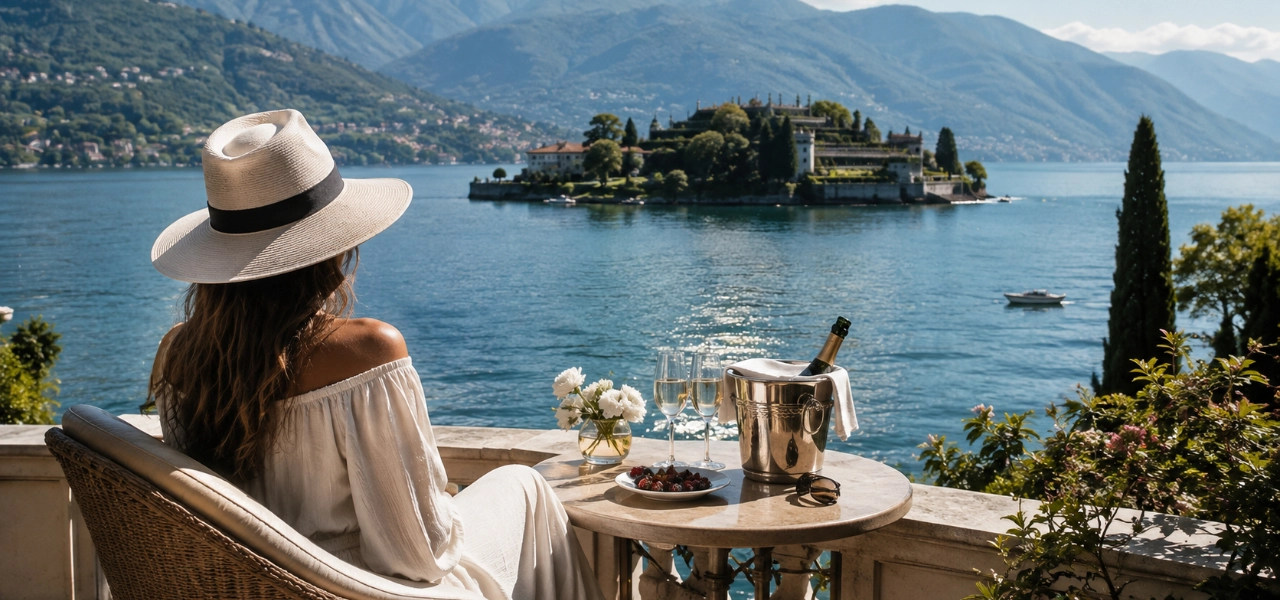
Palm trees, lush vegetation and exotic floral wonders make you feel as though you were somewhere in the south, rather than in northern Italy near the Swiss border. Lake Maggiore is the perfect destination for a late-summer getaway.
The Garden of Eden of the Italian lake district lies in the shadow of the snow-capped peaks of the Alps. The climate is mild and surprisingly Mediterranean, while the crystal-clear air is scented with flowers. These lakes are unlike any others in the world: gentle and fragrant, infused with the rich aromas drifting from ancient parks. There is Lake Garda, Lake Como, and the enchanting Lake Maggiore, whose waters shift from blue to green, the queen of the lakes.
At 66 kilometres long and typically 3–5 kilometres wide, Lake Maggiore is Italy’s second-largest lake. Nestled among the mountains, it winds between the surrounding heights almost like a river. There is nowhere from which the entire lake can be seen at once, which may be another reason why it seems smaller than it really is. At first glance, this Alpine lake is almost bottomless, as it is 370 metres deep at its deepest point. Even in summer it never becomes truly warm, offering pleasantly cool relief during hot weather, while in winter it never freezes over.
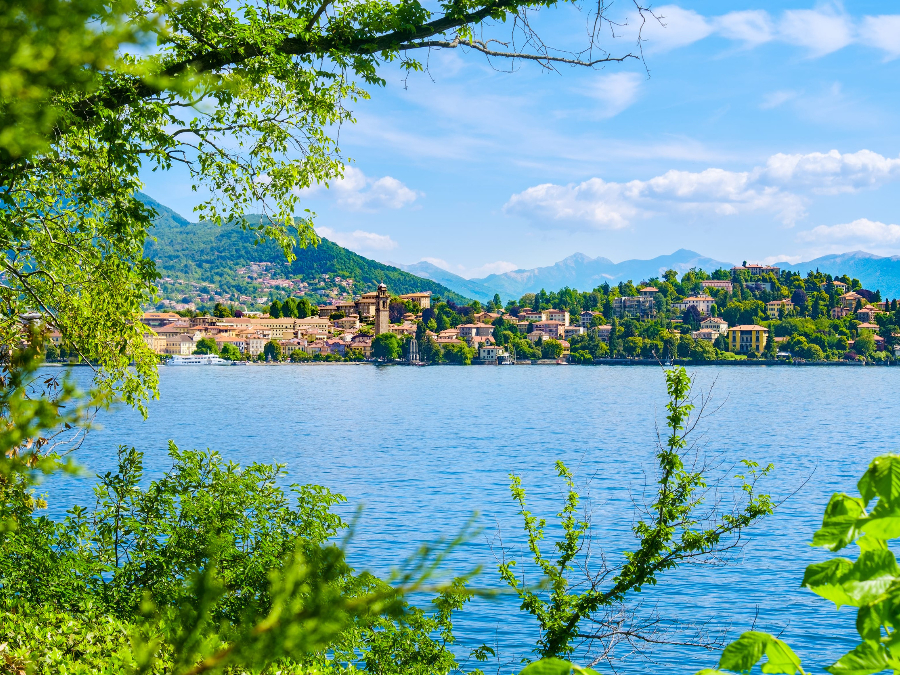
In summer, the beaches here fill up too, while sunbathing is possible almost all year round. Even in winter, sightseeing boats, hydrofoils and car ferries continue to operate along the lake. Although summer is the main holiday season, there is virtually no true off-season. The surrounding mountains are ideal for hiking in every season, followed by long, relaxing breaks and excellent food as Lombardy is a paradise for gourmets as well.
A Little French, Unmistakably Italian
While the lake itself exudes dignity and tranquillity, its shores are wonderfully varied. Its northern tip extends into Switzerland, together with the city of Locarno, famous for its film festival. The eastern shore belongs to Lombardy, the western shore to Piedmont, while the southern end merges into the vast Po Valley. In northern Lombardy, right by the Italian-Swiss border, even the church bells sound different from those farther south: instead of ringing with a quick, cheerful chatter, they toll slowly and deeply, reminiscent of the monasteries of the Lombards. High above, churches built during the Counter-Reformation seem to keep watch with a vigilant eye, as though they still feared that waves of Protestantism might spill over through the Swiss valleys. Times have changed since then, however, and the region has adapted to new circumstances. Today, Italians cross the border into Switzerland for work, while Swiss shoppers head the other way, as almost everything is cheaper in Italy than at home.
Piemont, on the lake’s western shore, has an entirely different character, shaped by the influence of neighbouring France. Once incorporated into the lands of the Counts of Savoy, the region is thoroughly Italian today, yet a local French dialect is still spoken in many mountain villages. In the Aosta Valley, even bilingual street signs can be seen.
To the south, where the lake reaches the plains, the landscape changes once again. This is the heart of the Po Valley. Cathedrals, hunting lodges and vast industrial estates stretch across the region around Turin, home of FIAT, and throughout the Po Valley. On the western shore of Lake Maggiore lies Stresa, a celebrated resort surrounded by some of Italy’s most beautiful scenery. There are magnificent fields, green meadows shimmering with bluish hues, and countless walnut trees whose foliage is so bright and clear that even their shade seems luminous. It is this sense of clarity that gives the landscape its distinctive atmosphere. Chapels and roadside crosses dot the countryside, their walls decorated with frescoes painted by local artists. With its wooded shores, the island of San Giulio and its small medieval basilica, Lake Orta presents the visitor with an exceptionally picturesque Italian landscape.
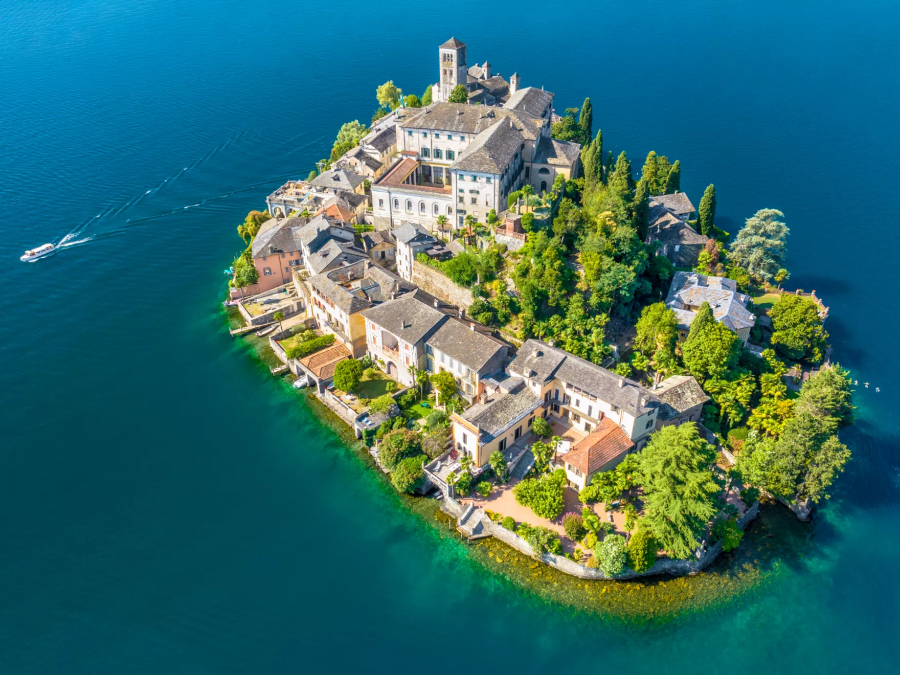
Many traditions come together here, Lombard, Alpine and French, but taken as a whole, the scenery and atmosphere feel unmistakably Italian. That sense of openness, ease, exuberant joie de vivre, theatrical flair and love of splendour so characteristic of Italians is just as present in the north. If we take the time to get to know the area, we realise that the Lombards laid the foundations of Italian culture; Piedmont won Italy’s independence, the region is the country’s breadbasket, and it was here that the world-famous art of Italian cuisine was born.
Jewels on the Lake
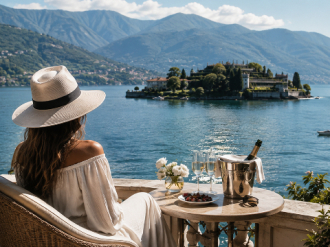
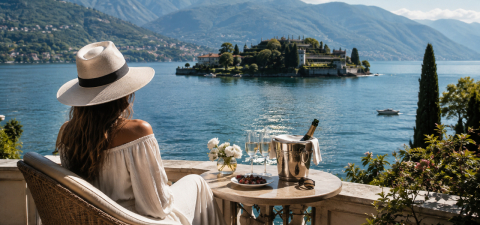
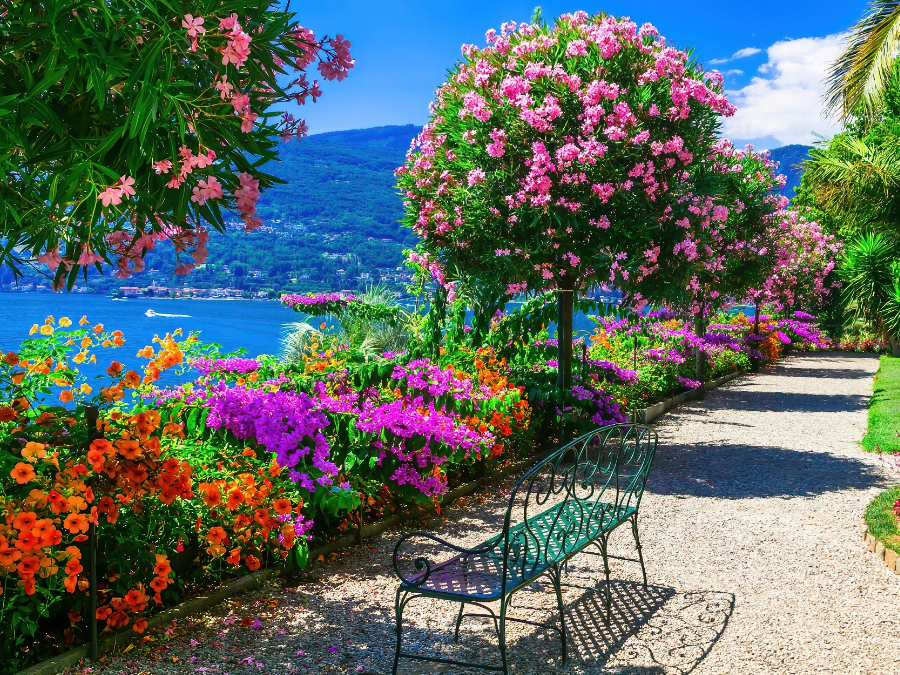
Lake Maggiore is adorned with several islands, large and small, whose beauty is almost beyond description. The most famous of them lie on the western side of the lake, in the Gulf of Pallanza, the most beautiful part of Lake Maggiore. This is where the rivers feeding the lake flow in, widening the basin and creating its sweeping bay. Here, nature scattered the pearl-like Borromean Islands, which can be reached by boat from Stresa. The four small islands are Isola Bella, Isola Madre, Isola dei Pescatori, and the tiny Isola di San Giovanni. The first stop is Isola Bella, and if we arrive at the right time, we are immediately greeted by the intoxicating scent of the acacia blossom and citrus fruits. Its terraced garden, rising in ten levels, is one of the most beautiful examples of Italian garden design. Here, in an artfully arranged setting, visitors can admire an abundance of subtropical plants: cherry laurel, cedar, magnolia, cork oak, sago palm, baobab, camellia, and countless other exotic floral marvels, all blooming and perfuming the air in colours that change with the seasons.
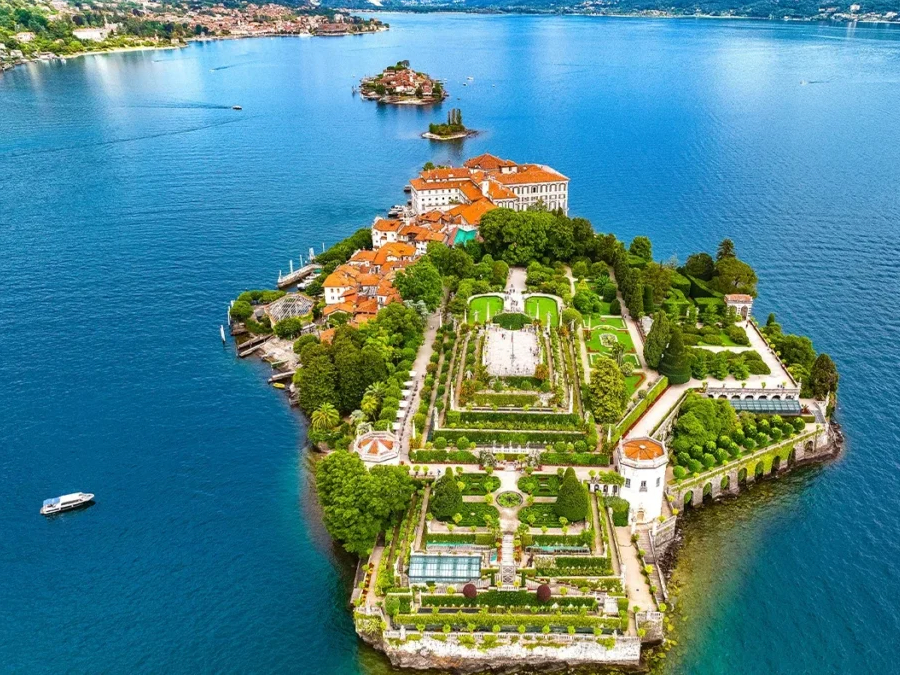
Oleanders, which usually have to spend the winter sheltered in pots, grow freely and exuberantly here. Oranges, lemons, figs and olives also thrive in this Garden of Eden, which is the creation of a single man: Count Vitaliano Borromeo, who dreamed of building a hanging garden on the island in the mid-17th century. When he first came here, there was little more than a church and a handful of houses. He had fertile soil brought in to cover the flat slabs of rock so that the island could be landscaped, and above all, he commissioned a magnificent summer residence. The “enchanted” palace still looks much as it did when it was originally furnished. Its glittering reception rooms, tapestries, valuable paintings and works of art can all be admired today. In the gardens, ornamental plants are arranged in geometric patterns alongside pools, pergolas and columns, interspersed with Baroque and Hellenistic-style statues. Tourists arrive in droves, yet the truest expression of nature is not found here, in this carefully created dream world, but in the landscape surrounding it: in the blue waters of the lake and the splendour of the Alpine ranges. In early spring, snow still glistens on the barren rocky peaks, while at their feet gardens and groves are already bursting into bloom. Anyone who has witnessed this scene even once will carry this beautiful symbol of rebirth and the triumph of life with them forever.
The next island, Isola Madre, also belongs to the Borromeo family and is still inhabited by descendants of the count. It is smaller than Isola Bella and feels less like a museum, precisely because it remains a private residence. Nevertheless, several historic rooms, complete with their original furnishings, can be visited inside the ivy-clad Renaissance-style villa. Everything seems much as it did four hundred years ago: the dining table is laid, and beside it stands the butler in a powdered wig and ornate livery, or rather, his wax figure. In the count’s former study, visitors can also encounter a wax figure of the count himself.
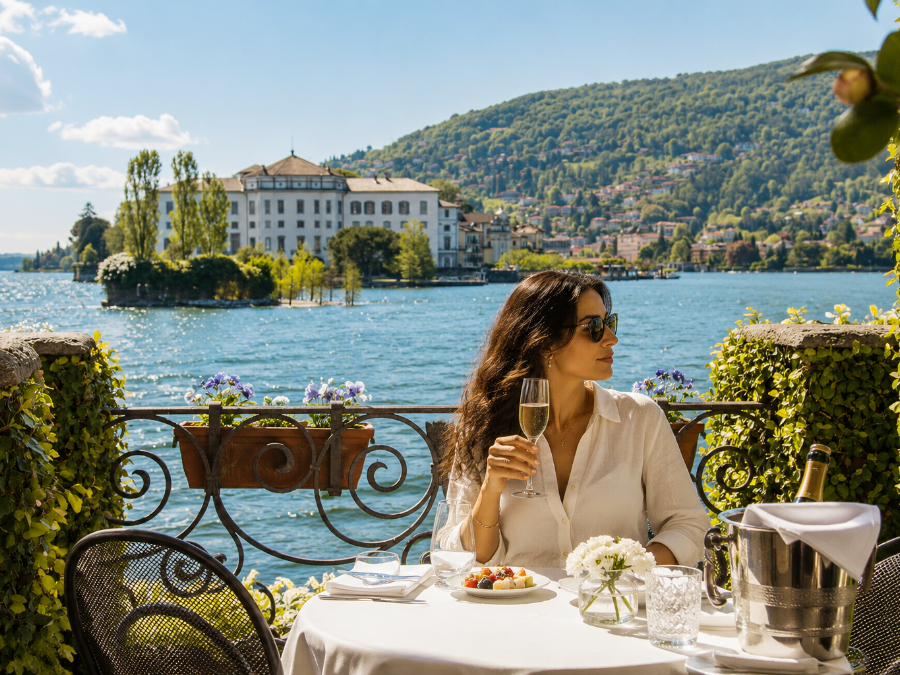
The most picturesque of the three is Isola dei Pescatori: a quintessential, bustling Italian fishing village where every inch of space is occupied by little whitewashed houses huddled together around the church. Here, a completely different set of mouth-watering aromas drifts through the air. After the two islands steeped in the past, it feels refreshing to return to the cheerful bustle of everyday life, unfolding just as it does in fishing villages, harbours and fish markets all across Italy.
The Charm of a Bygone Era
Along with Locarno, Stresa is the most famous resort on the lake and has enjoyed legendary status since the early 20th century. In those days, many celebrated writers and artists came here, seeking rest in its idyllic surroundings or hoping to recover from physical and emotional troubles. Rousseau came up with the setting for the utopian ideal of Julie, or the New Heloise in this landscape, while Goethe also sang its praises in Wilhelm Meister’s Apprenticeship, without ever having seen it himself. Churchill also spent many holidays in Stresa, and Hemingway also withdrew here to write. Fortunately, Stresa’s magnificent little Belle Époque palaces were never replaced by modern hotels. They still stand today, seemingly dreaming of the good old days, adding both to the town’s charm and to its enduring appeal as a travel destination.
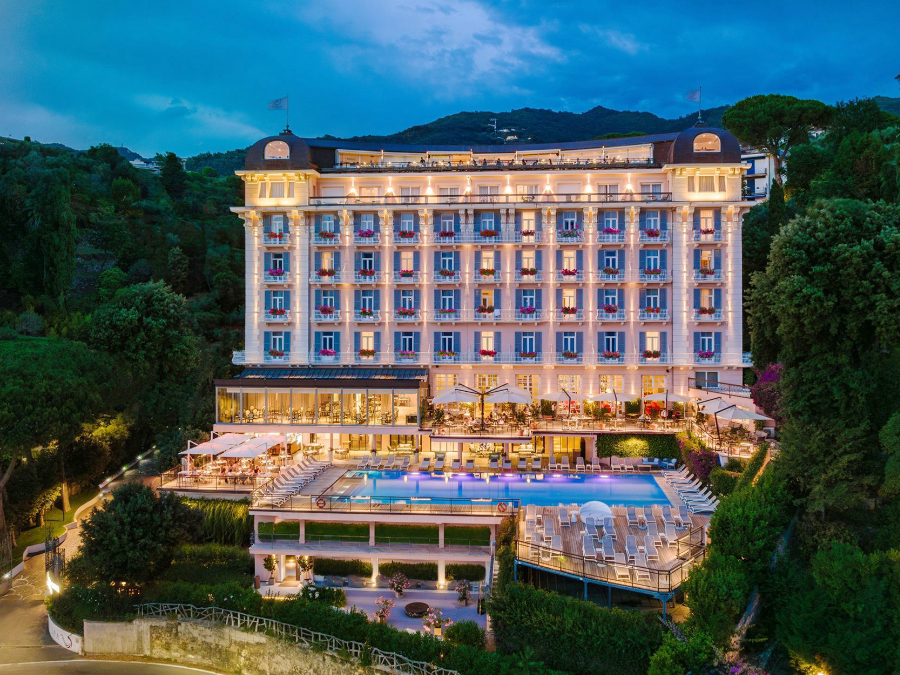
Who could understand this better than the Italians, who preserve the remnants of their millennia-old culture as though they were made of gold? And in a sense, they are worth their weight in gold. Stresa is at once nostalgically charming and thoroughly cosmopolitan, offering all the comforts today’s travellers expect. It is filled with beautiful hotels, many of them five-star establishments, the most famous being the historic Grand Hotel Bristol. Even if we are not staying there, it is worth having lunch on its terrace overlooking the lake, or at the very least stopping by for a cappuccino.
The Elegant Luxury of the Belle Époque
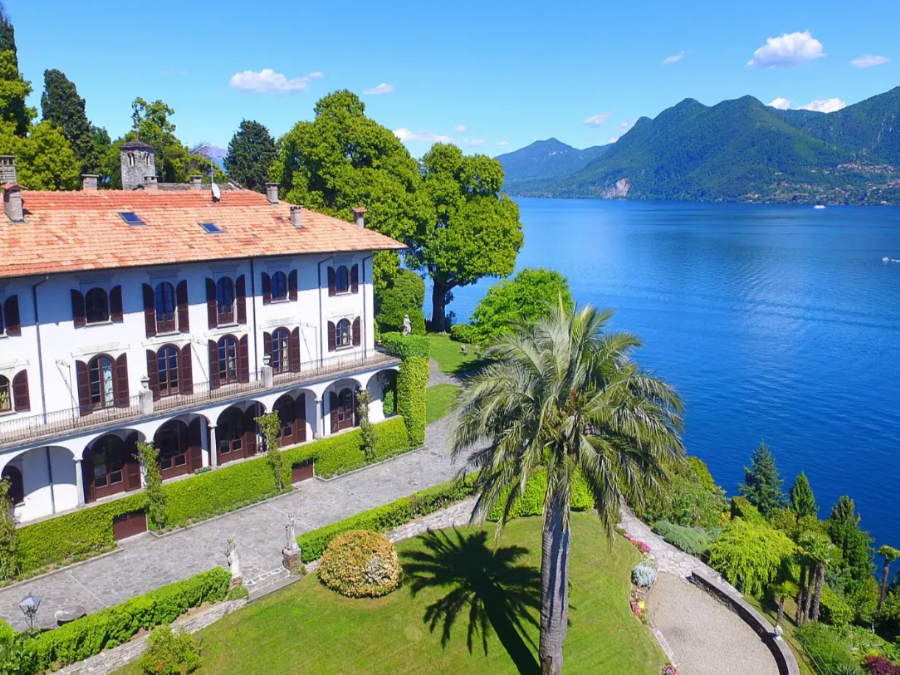
Along the waterfront and up the hillside, one magnificent luxury villa and hotel follows another, their terraces overflowing with flowers. George Clooney visited the area some years ago and was so captivated by the fairy-tale scenery that he soon bought a villa near Lake Como. Elegant luxury hotels offering first-class hospitality can be found on both the Italian and Swiss sides of the lake.
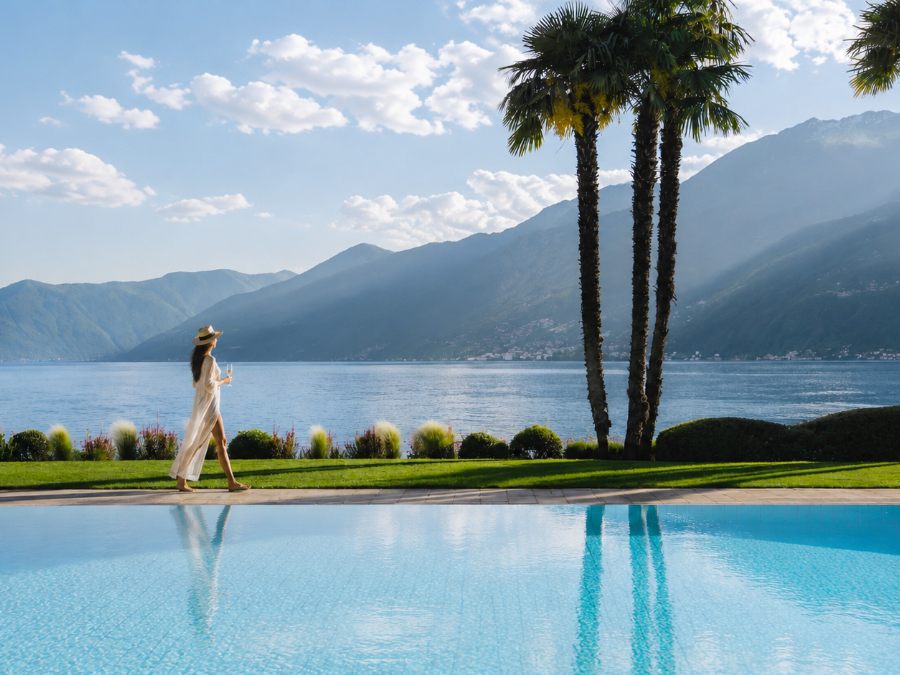
The exclusivity of Lake Maggiore is never ostentatious; it is a legacy of a bygone age when travel still had a certain elegance. In Stresa, one of its finest expressions is the Grand Hotel des Iles Borromées, the lakeside grand hotel founded in 1863. Interiors in gold, crimson and indigo, historic salons and sweeping views of the Borromean Islands evoke the splendour of the Belle Époque. The Hemingway Suite pays tribute to the writer, who was himself a guest here, while the hotel has its own private jetty, from which guests can set off by private boat for Isola Bella and Isola Madre.
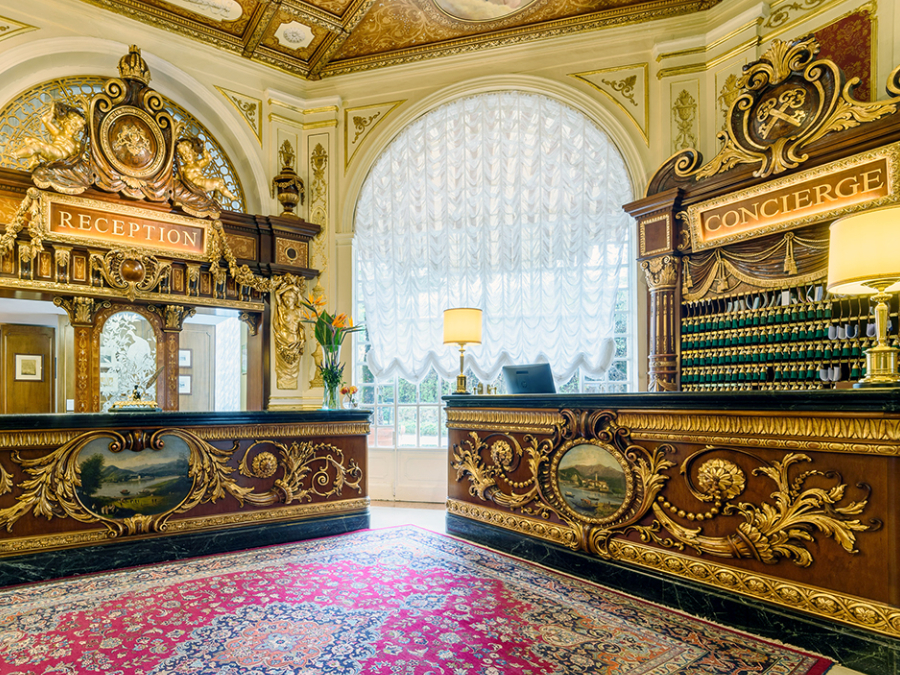
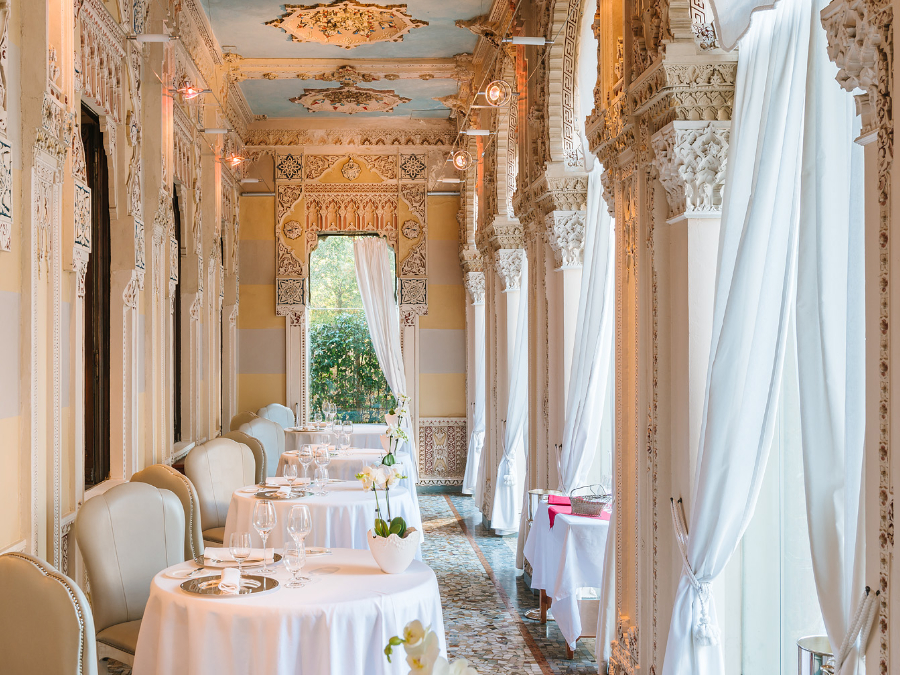
For the region’s most exceptional gastronomic detour, it is worth leaving the shores of Lake Maggiore for an evening. In Orta San Giulio, Antonino Cannavacciuolo’s Villa Crespi restaurant, housed in a 19th-century Moorish-style villa, continues to hold three Michelin stars in the 2026 Michelin Guide, meaning it is quite literally worth a special journey. Alongside a cuisine that brings together memories of southern Italy, Piedmontese ingredients and contemporary haute cuisine, the setting itself is an integral part of the experience. This is not simply dinner, but a meticulously crafted, multi-hour gastronomic journey.
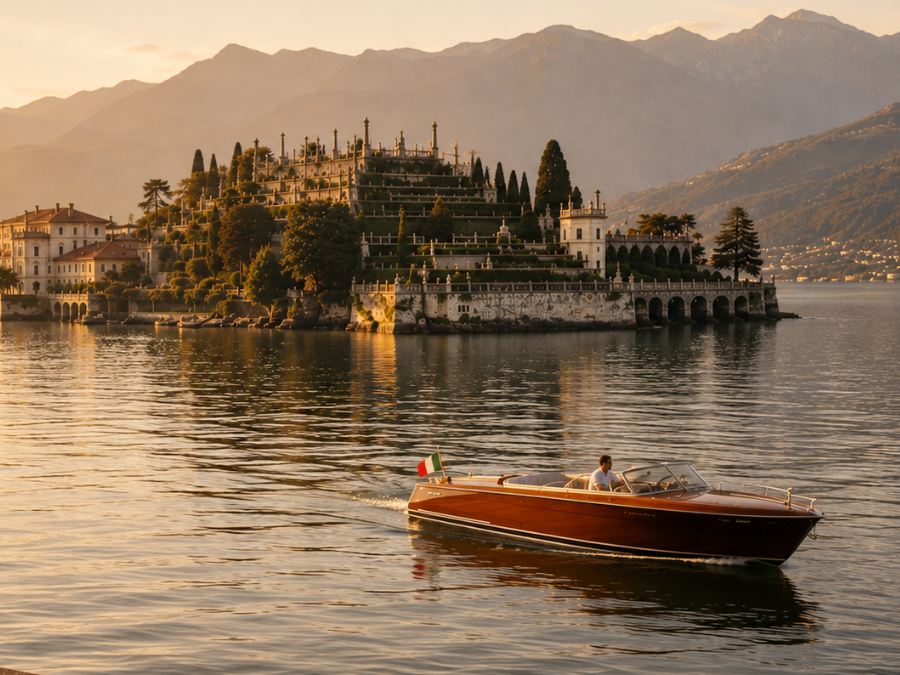
The days spent on the shores of Lake Maggiore offer moments that are hard to find anywhere else: in the morning, approaching the Baroque palace of Isola Bella by private boat; in the afternoon, crossing the Borromean Gulf aboard a classic mahogany Riva Aquarama motorboat; then, sipping ice-chilled champagne as we watch the sun slowly disappear behind the Alps. Along the way, we enjoy a box-seat view of the villas and castles lining the shore. In some places, the waterfront is bordered by gardens all the way along; elsewhere, it is framed by steep cliffs. On some heights, castles stand watch; on others, elegant hotels follow one after another. The most spectacular stretch runs from Stresa to Belgirate, where some of the most famous residences can be admired, including Fontana, Matilda and Pallavicino. We can also set out on foot, provided our legs are up to the task, because there is no such thing as flat terrain here. Strolling through the parks and along the promenades is easy enough, but most other paths tend to climb or descend quite steeply.
Do not expect motorways here: the heavy traffic around the lake is funnelled onto a single main road. The Italians would no doubt gladly widen it, but there is simply no room, as the cliffs rise too close to the shoreline. Roads cannot be built to many of the mountain villages either, so they can only be reached on foot, by cable car, or, in emergencies, by helicopter. From Stresa, for example, we can set out on foot for the 1,491-metre summit of Mottarone, although taking the cable car is the wiser option. From the top, a sweeping panorama opens up over the lake district and the Alpine ranges, from Monte Viso to Monte Rosa, with views stretching all the way to the Po Valley. It is a breathtaking sight.
The most famous destinations near the lake can be reached by almost any means of transport. Milan tempts us from the Lombardy side, Turin from the other, but if time is short and we still want to see something extraordinary, Parma and Cremona make an excellent choice: both can be visited in a single day. Parma, of course, is famous for Parmesan cheese and prosciutto, but it is also the city of Verdi, one of the greatest composers of all time, who was born in the nearby village of Roncole. Arturo Toscanini was born in Parma, while Paganini is buried here, so it is hardly surprising that the city’s musical culture is considered exceptional even by Italian standards. In the historic centre stands the late-Renaissance Palazzo della Pilotta, associated in the literary imagination with the court intrigues of Stendhal’s The Charterhouse of Parma. The monastery that gave the novel its title can also be visited around 19 kilometres from the city.
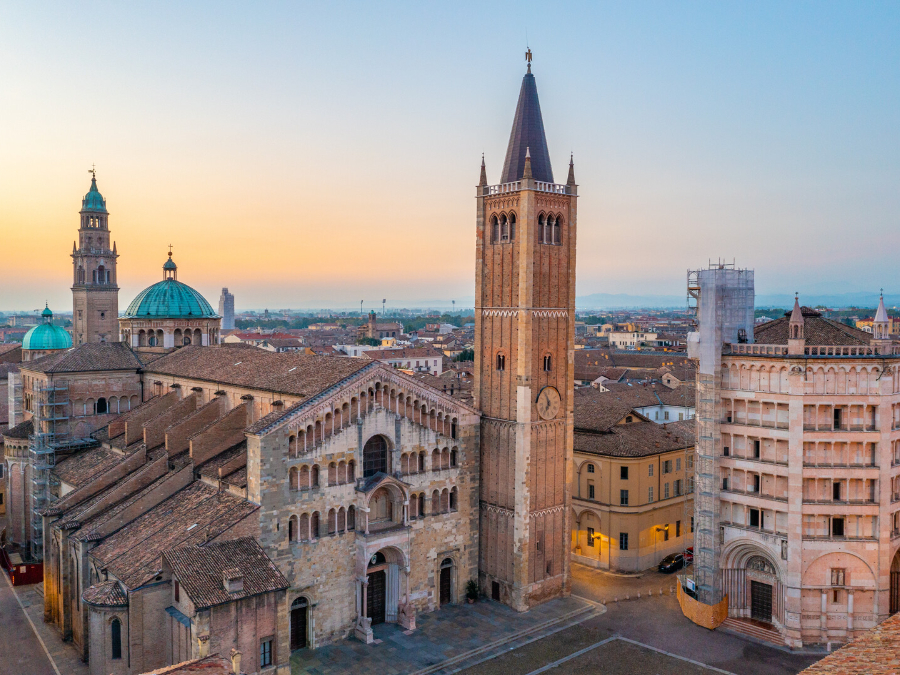
Art lovers will have no reason to complain either: Correggio, one of the great masters of the High Renaissance, lived in this quiet little city. From here, Cremona is only a short trip away, the birthplace of some of the world’s finest string instruments, including those made by the Amati, Guarneri and Stradivari families. The Amati brothers laid the foundations of the art of violin making, while the violas da gamba and violas crafted by the Guarneri family went on to conquer the world. It was in their workshop that Stradivari himself became a master.