In Europe’s great open-air theatres, summer is not a season but a stage where ancient stone, open sky, and living performance dissolve into one another at dusk.
There is a particular, almost imperceptible transformation that takes place across Europe in summer – one that no opera house season brochure can quite capture. As twilight stretches and the air softens, the continent’s most extraordinary theatres – carved into rock, raised by emperors, rebuilt from memory, or shaped by human devotion – begin to breathe again. These are not merely venues; they are palimpsests of civilizations, places where art is inseparable from landscape and history. To follow them is to travel through centuries in a single season, guided by music, language, and light.
The grandeur of permanence: Verona at full voice
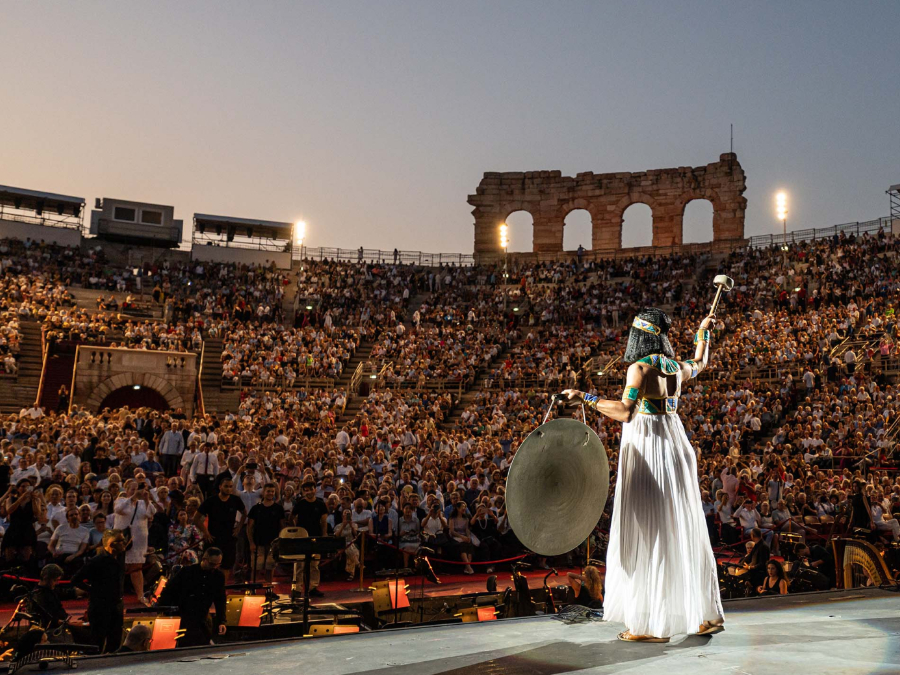
The Arena di Verona does not simply set the standard for open-air performance – it defines the very idea of it. Approaching the structure from the narrow streets of Verona, one first senses its mass before seeing it: a pale, elliptical giant rising from the city fabric, built in 30 AD and still startlingly intact. Yet nothing prepares you for the moment you step inside at dusk. The scale is not just architectural – it is emotional.
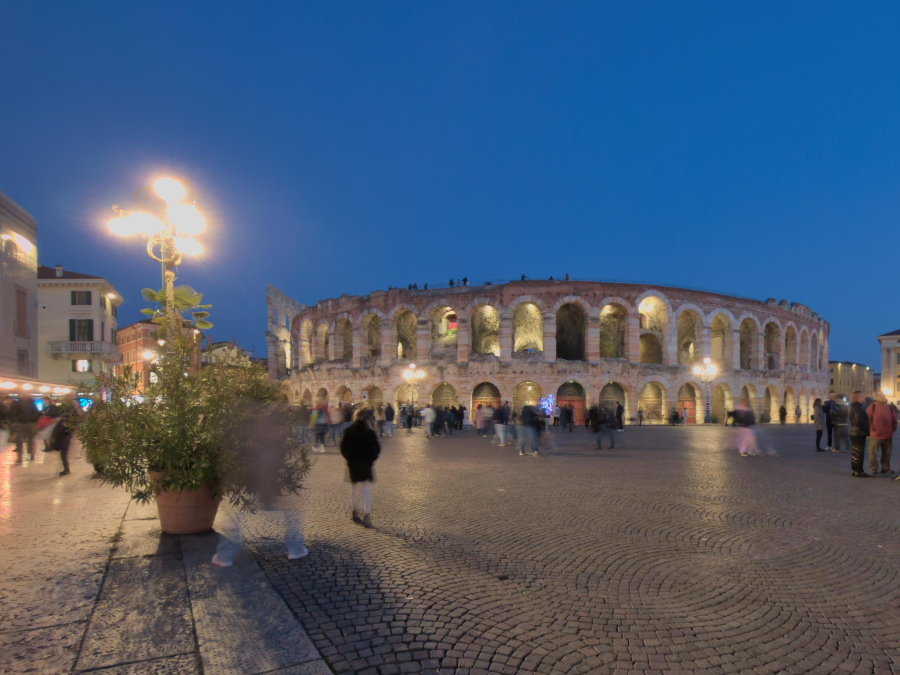
Opera here is inseparable from spectacle. The Arena’s summer festival, now well into its second century, was born in 1913 with a production of Aida, and that sense of monumental ambition has never receded. Even seasoned opera-goers find themselves disarmed: hundreds of performers moving across a stage vast enough to hold processions, armies, and elaborate architectural illusions; orchestral sound rising unamplified into the open sky; and the ritual that begins each evening, when thousands of small candles flicker to life in the audience, transforming the amphitheatre into a constellation of human presence.
This summer’s program leans unapologetically into that heritage. La Traviata returns in a lavish staging that reframes Parisian intimacy on an epic scale, while Turandot and Nabucco reclaim the Arena’s taste for grand narrative and choral force. And then there is Aida itself – presented, as is tradition, in multiple stagings, each attempting to outdo the last in visual imagination. This is opera that does not seek subtlety; it seeks awe. And in Verona, awe still feels like a legitimate artistic goal.
Marble, memory, and myth: Athens under the Acropolis
If Verona overwhelms, the Odeon of Herodes Atticus compels silence. Built in 161 AD and restored in the twentieth century, it sits in the shadow of the Acropolis with a quiet authority that no modern venue could replicate. The marble seating, the semicircular perfection of the stage, the looming presence of antiquity above – everything here insists on continuity.
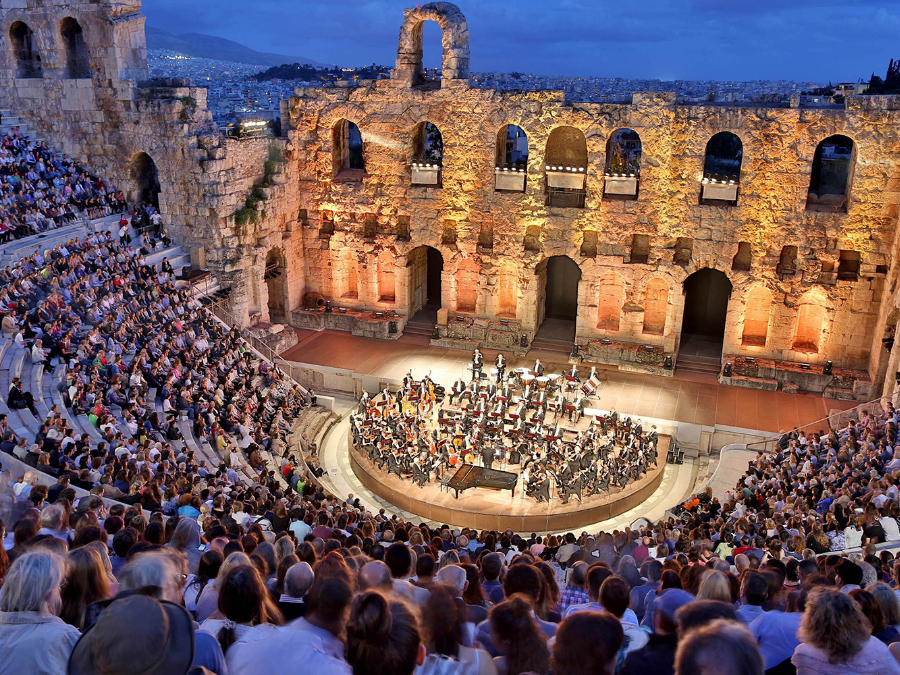
During the Athens and Epidaurus Festival, the Odeon becomes a meeting point between past and present. Greek tragedies return to their birthplace, not as museum pieces but as living works. When a chorus gathers here, their voices seem to travel not only across space but across centuries, echoing through the same architectural geometry that once amplified the words of Sophocles and Euripides.
This season’s programming deepens that dialogue. International directors reinterpret classical texts with contemporary urgency, while orchestras of global renown perform works that range from Beethoven to modern compositions. Yet what remains most striking is the atmosphere: the gradual cooling of the stone beneath you, the Acropolis illuminated above, and the sense that performance here is not an event but a continuation. In Athens, theatre does not entertain so much as remind – it reminds you of the origins of drama, of democracy, of the human impulse to gather and listen.
Sicily’s suspended dream: Taormina between fire and water
There are theatres with beautiful settings, and then there is the Teatro Antico di Taormina, where the setting becomes the performance’s silent protagonist. Built by the Greeks in the third century BC and later expanded by the Romans, it frames Mount Etna on one side and the Ionian Sea on the other, creating a natural scenography that no designer could rival.
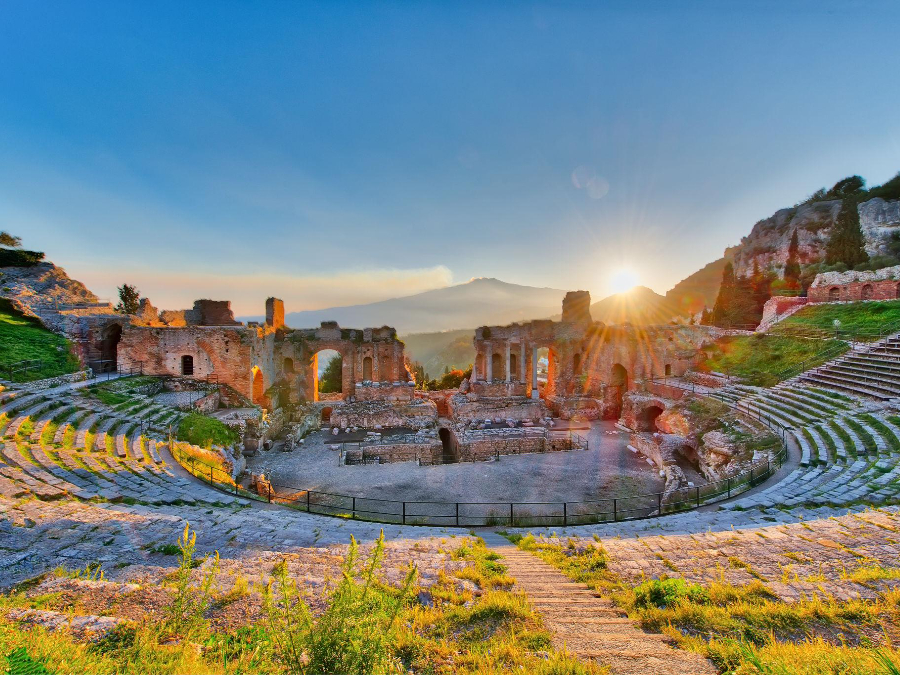
Arriving early is essential here. As the sun begins to sink, the sky moves through a spectrum of gold, rose, and indigo, while Etna – sometimes gently smoking – asserts its presence with quiet menace. The audience falls into a shared stillness that feels almost ceremonial. By the time the performance begins, one has already been moved.
The summer program reflects this sense of fluidity. Opera shares the stage with the Taormina Film Fest, symphonic concerts, and international touring artists. Unlike Verona, where productions compete to dominate the space, Taormina invites restraint. Directors often allow the landscape to speak, using minimal sets that frame rather than obscure the horizon. The result is an experience that feels less constructed and more discovered – as though the performance has emerged organically from the place itself.
London’s living past: the intimacy of the spoken word
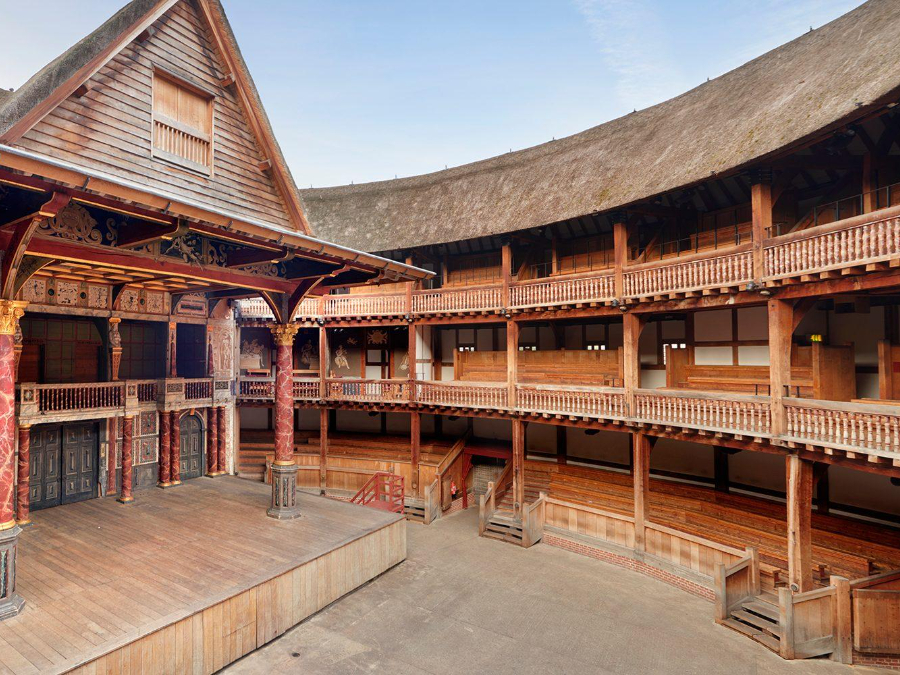
The Shakespeare's Globe offers a different kind of authenticity – one rooted not in ancient stone but in careful reconstruction and living tradition. Built near the site of the original Elizabethan playhouse, it recreates the conditions under which William Shakespeare’s works were first performed: an open roof, a thrust stage, and an audience that is as much participant as observer.
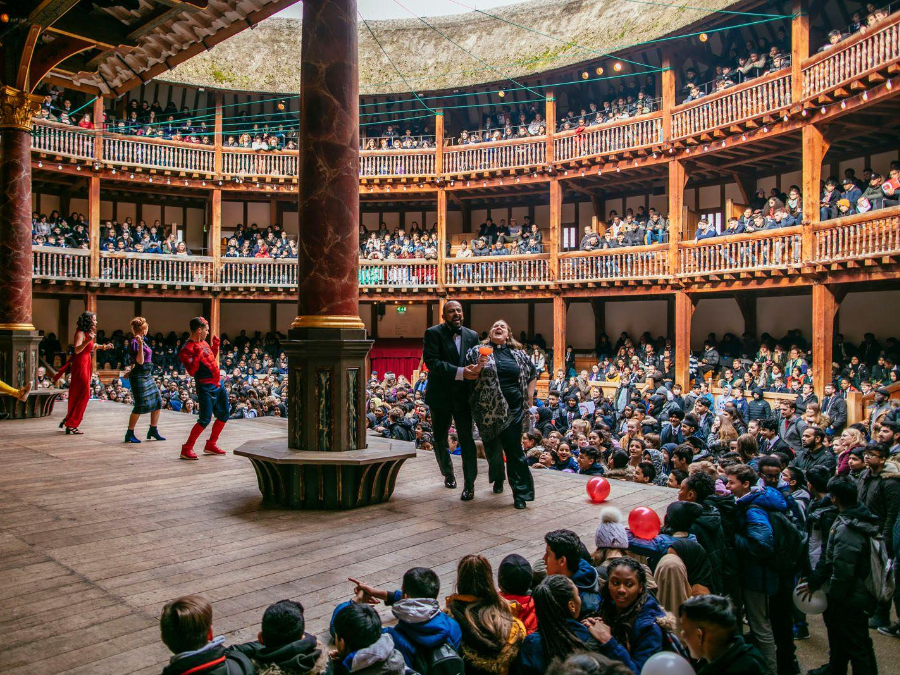
Summer here is a celebration of language. Productions of Hamlet, Twelfth Night, and Macbeth unfold with minimal scenery, placing emphasis squarely on the actors and the text. Standing in the yard, one becomes a “groundling,” close enough to catch the flicker of an expression, the intake of breath before a soliloquy. Rain may fall, planes may pass overhead, and yet the illusion holds – because the connection between performer and audience is immediate, unmediated.
What distinguishes the Globe is its refusal to monumentalize Shakespeare. Instead, it restores his work to its original vitality: playful, raw, occasionally chaotic, and deeply human. In a Europe of grand stages and ancient ruins, it is a reminder that theatre’s greatest power often lies in simplicity.
At the edge of the Atlantic: the Minack’s elemental drama
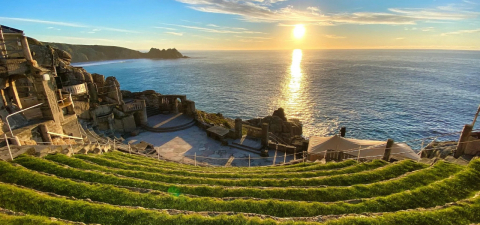
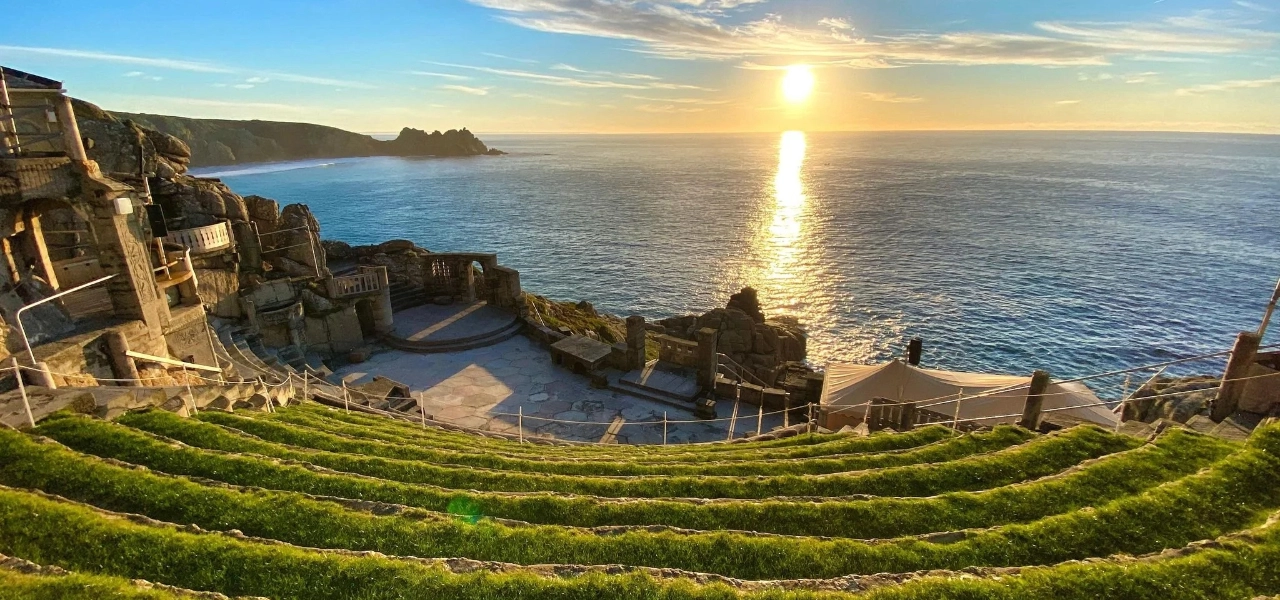
Far from capitals and cultural capitals alike, the Minack Theatre feels like a secret discovered rather than a venue visited. Carved by hand into granite cliffs in the 1930s by Rowena Cade, it overlooks the Atlantic with a breathtaking sense of exposure.
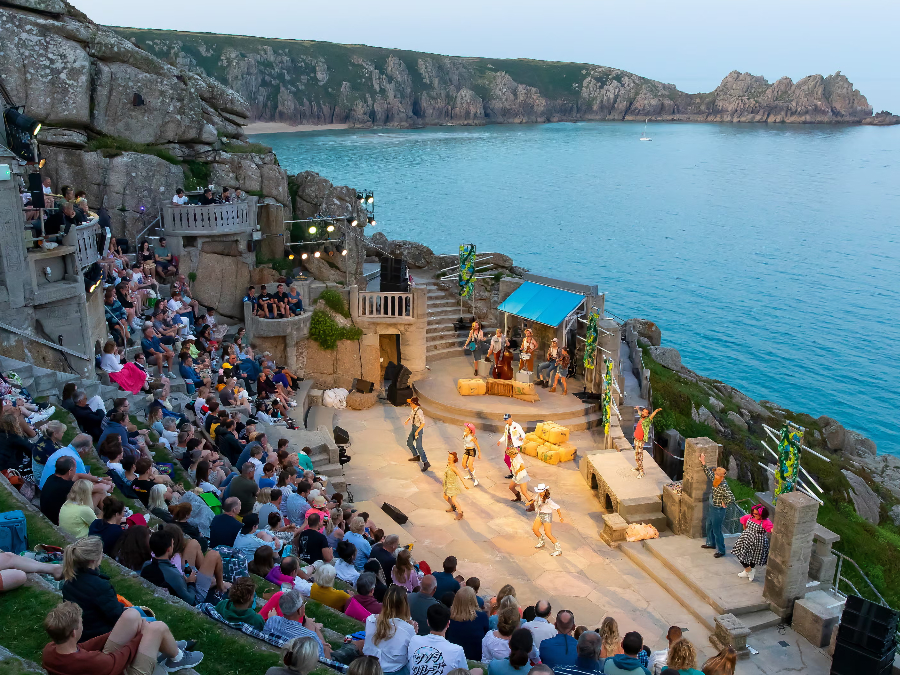
Here, nature is not a backdrop but an active collaborator. The sound of waves punctuates dialogue, seabirds trace arcs above the stage, and the light shifts unpredictably as the evening unfolds. Performances – ranging from Shakespeare to musicals and contemporary plays – must contend with these elements, and in doing so, they gain a vitality that no controlled environment could offer.
There is a particular thrill in watching a storm gather on the horizon as a play reaches its climax, or in seeing the last light of day dissolve into darkness just as the final act begins. The Minack reminds us that theatre, at its core, is an encounter – not only between actors and audience, but between humanity and the world it inhabits.
Budapest’s quiet elegance: culture in balance
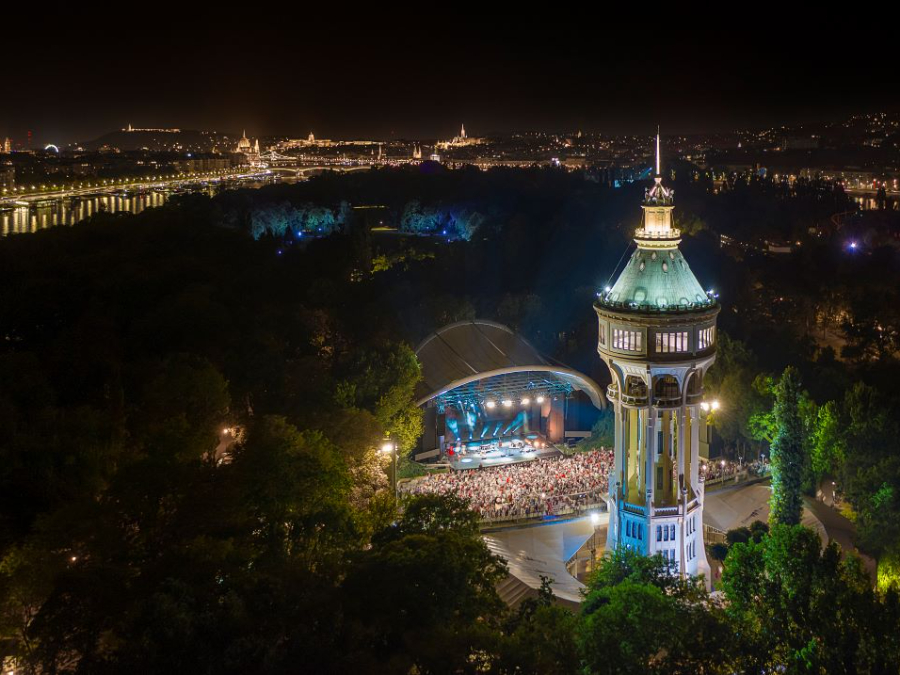
In the heart of the Danube, the Margaret Island Open-Air Stage offers a more understated, but no less compelling, vision of the open-air theatre. Surrounded by greenery and water, it feels at once central and secluded – a place where the city softens into something more contemplative.
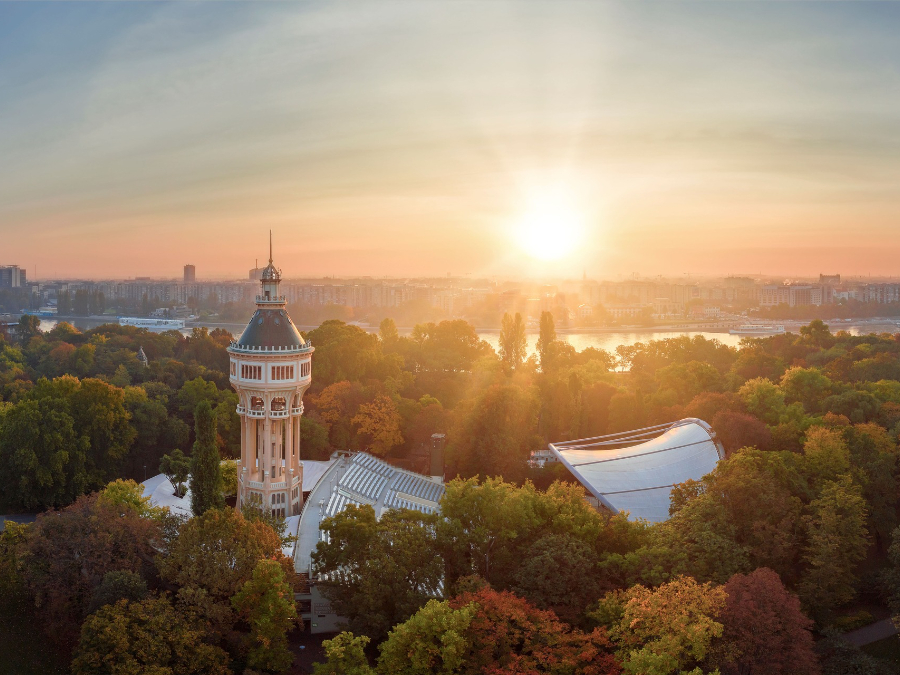
Its summer program is notably diverse, blending opera, ballet, and crossover concerts in a way that reflects Central Europe’s layered cultural identity. One evening may bring Puccini, another a visiting ballet company, and yet another a symphonic celebration of film music. The productions are polished but not overwhelming, allowing the setting to retain its charm.
What distinguishes Margaret Island is its sense of ease. Audiences arrive not only as cultural pilgrims but as participants in a broader summer ritual: an evening walk along the river, a glass of wine under the trees, and then a performance that feels seamlessly integrated into the rhythm of the city. It is, perhaps, the most livable of Europe’s great open-air stages – a place where art enhances life rather than interrupting it.
A season written in the open air
To move between these theatres over the course of a summer is to experience a spectrum of artistic philosophies, each shaped by its environment and history. In Verona, opera becomes an assertion of human ambition against time. In Athens, it becomes a dialogue with origins. In Taormina, it dissolves into landscape. In London, it returns to the immediacy of the spoken word. In Cornwall, it yields to nature’s unpredictability. And in Budapest, it finds a quiet equilibrium.
What unites them is not style or repertoire, but the simple, profound act of gathering under the open sky. There is no ceiling here, no separation from the world beyond the stage. The same stars that watched over ancient audiences continue to watch over us, unchanged.
In an age of controlled environments and digital mediation, these theatres offer something increasingly rare: an experience that is at once ephemeral and timeless. The performance ends, the lights fade, the audience disperses – but the place remains, waiting for the next evening, the next story, the next gathering.
And so the season continues, written not in programs or schedules, but in light, air, and memory.