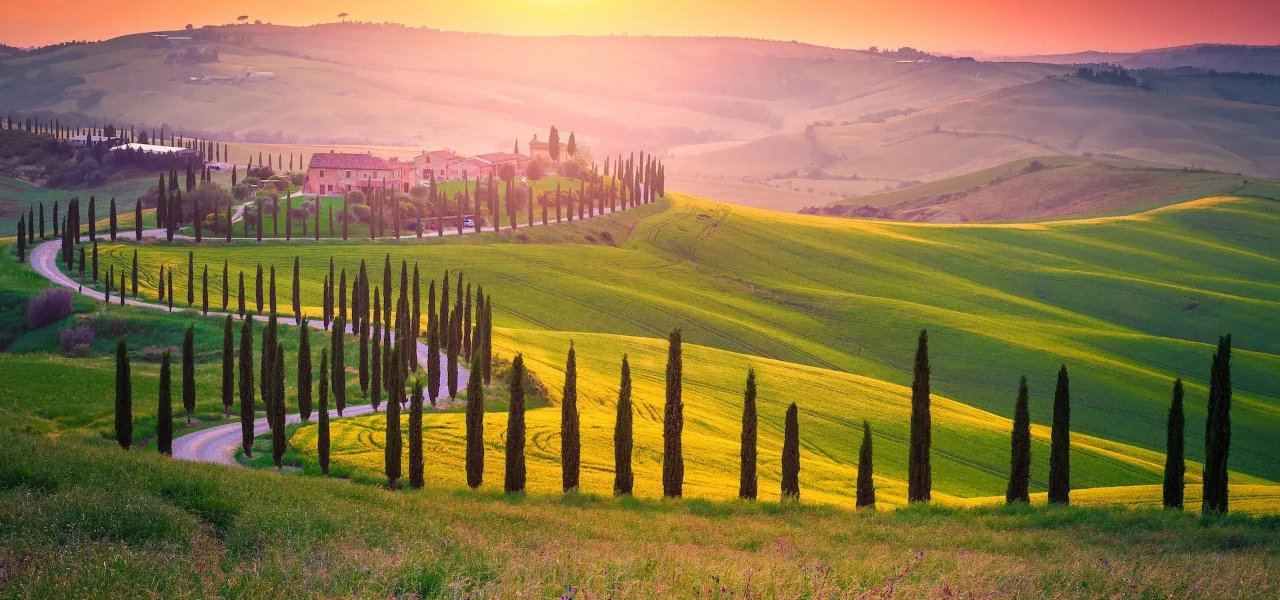
The jewel of Central Italy: One of the most beautiful landscapes in the world.
The name Tuscany has a melody of its own, almost as if it were meant to be sung, like an aria by Puccini, who was himself a Tuscan. So were Dante, and two of the greatest figures of the Renaissance: Leonardo da Vinci and Michelangelo. Art seems to grow from every blade of grass, from the silver leaves of olive trees blending into the dark silhouettes of cypress groves. It's a land where the raw strength of an ancient farming tradition meets austere simplicity and quiet aristocratic elegance.
Tuscany is the land of great poets and painters, of saints and rebels, of Chianti, and of a Middle Ages that still lives on today. Yet it owes its name to the ancient Etruscans who once lived in this region. Because of them, the Romans referred to the area as Etruria or Tuscia.
The heart of the Renaissance
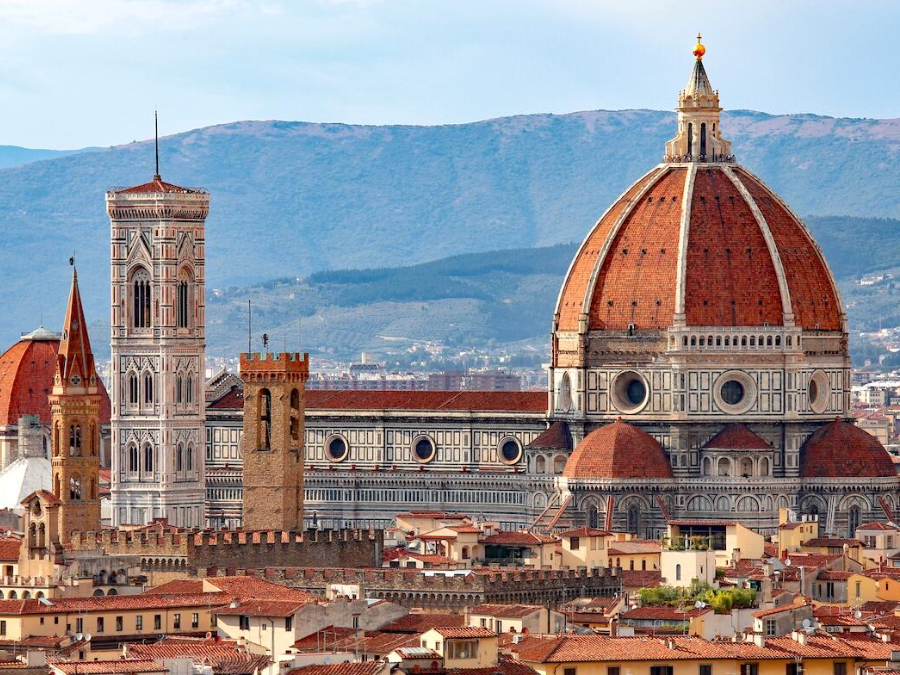
All roads lead to Florence, as the locals say, and they are every bit as proud of their city as the Romans are of Rome, with good reason. Florence is not just a city, but one of the cradles of European culture. By the end of the Middle Ages and throughout the Renaissance, Florence was an exceptionally wealthy city-state, primarily due to its thriving trade and advanced banking system. This economic strength made it possible for the city to become a center of art and intellectual life.
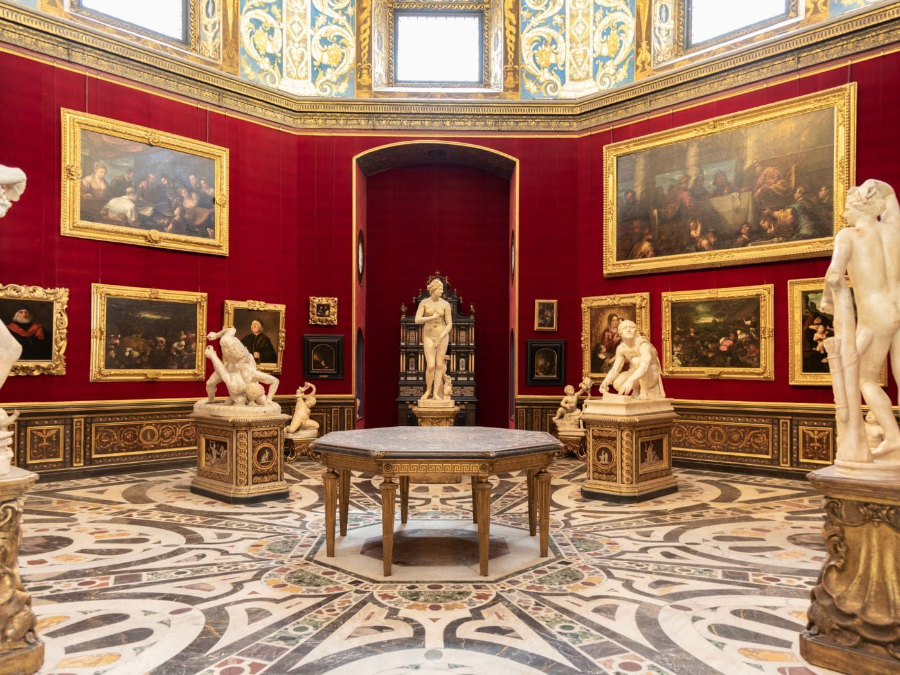
As the cradle of the Renaissance, Florence is closely associated with figures such as Leonardo da Vinci, Michelangelo, and Botticelli. It was here that a new way of thinking emerged, one that placed humanity, perspective, and beauty back at the center of the world. In this sense, the city gave the world not only masterpieces, but also a new worldview. That is why, even if you're not the museum-going type, the Uffizi Gallery is an absolute must-see. Afterward, walking the same streets once traveled by the great figures of the Renaissance becomes a completely different experience.
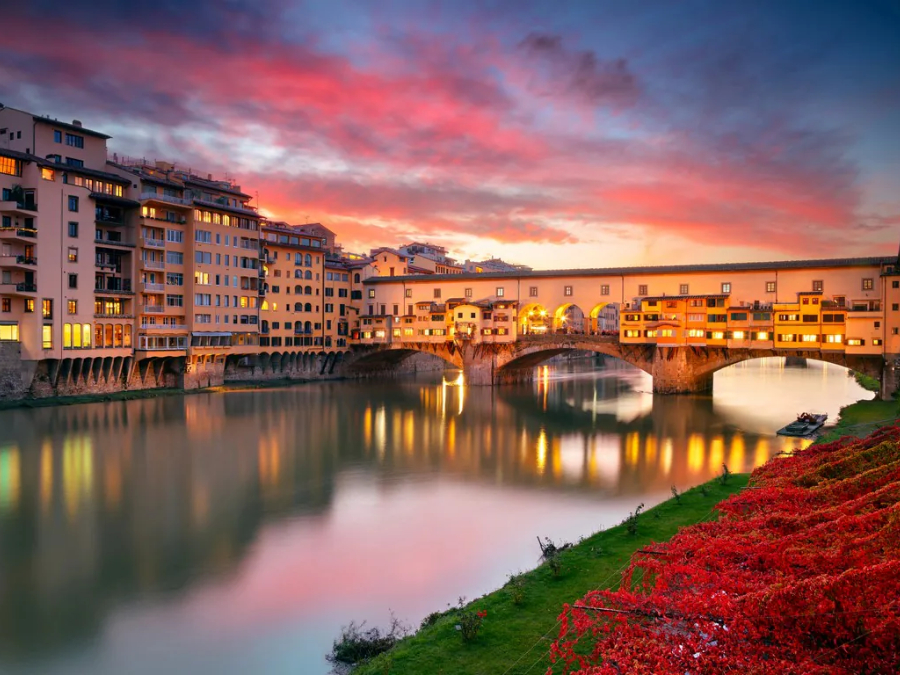
Cross the Ponte Vecchio, which is more than just a bridge, it's a living part of the city, where the goldsmiths' shops preserve the continuity of the medieval urban landscape. In the Oltrarno district, you'll find fewer tourists, but more artisan shops, workshops, and an authentic local atmosphere.
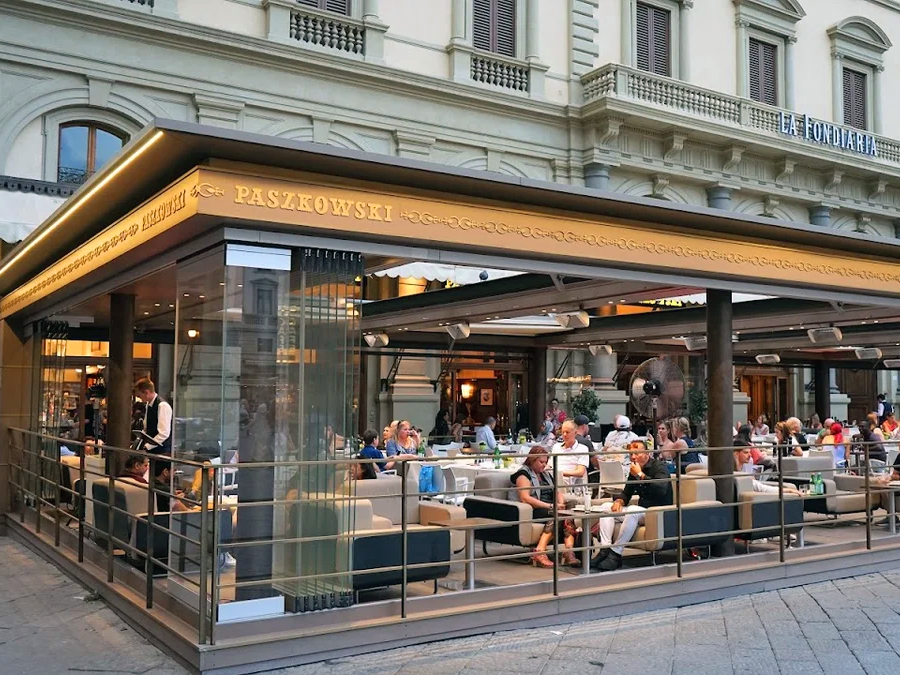
For a moment of relaxation, settle onto the terrace of Caffè Concerto Paszkowski, located amid the elegant bustle of Piazza della Repubblica. Sample the 30-month-aged Parma ham, enjoy a few pieces of bruschetta (garlic-rubbed toasted bread drizzled with olive oil) and pair it with a light, dry Chianti. At the beginning of the 20th century, the café was one of the centers of Florence's intellectual life. Known as a "literary café," it served as a meeting place for writers, poets, and artists, where new ideas were born over steaming cups of ristretto and freshly printed daily newspapers.
Crime associated with illegal migration has become an increasingly visible part of everyday life for both travelers and locals in most major Italian cities, including Florence. Locals especially warn visitors to avoid the vast and historic Parco delle Cascine park, as well as Santa Maria Novella railway station and the surrounding streets, which are now considered particularly dangerous not only at night but also during the day. Thefts and robberies are a daily occurrence, and women – especially those traveling alone – cannot feel safe anymore. What a sorrow it is to lose the sense of safety and peace – such an important part of the magic – due to this cultural shock overwhelming Western Europe. Nevertheless if you're looking for the untouched Tuscan way of life and authentic local lifestyle, it's better to head for the smaller towns and the rural countryside instead.
The untouched charm of Tuscany
If you're looking for the real Tuscany, it's worth heading farther south, where the silence of cypress-lined hills, endless vineyards, and towns enclosed within ancient walls await. The first stop is Siena, Florence's medieval rival, where the city’s red-brick colors seem to blaze in the sunlight, with dazzling ochre and rust brown colours. After the restrained, almost masculine character of gray Florence, Siena is unpredictable. Mystical, dazzlingly colorful, like a woman. It is the complete opposite of Florence. While Florence is all about rebirth and the Renaissance, Siena is the stronghold of Gothic architecture. Its winding, spiral-like streets are the very embodiment of a preserved, untouched Middle Ages. Built on a clay hill, Siena gave its name to the reddish-brown pigment known as burnt sienna, produced by firing the local terra di Siena clay. And when the setting sun sets its walls aglow, the city truly looks as if it were burning.
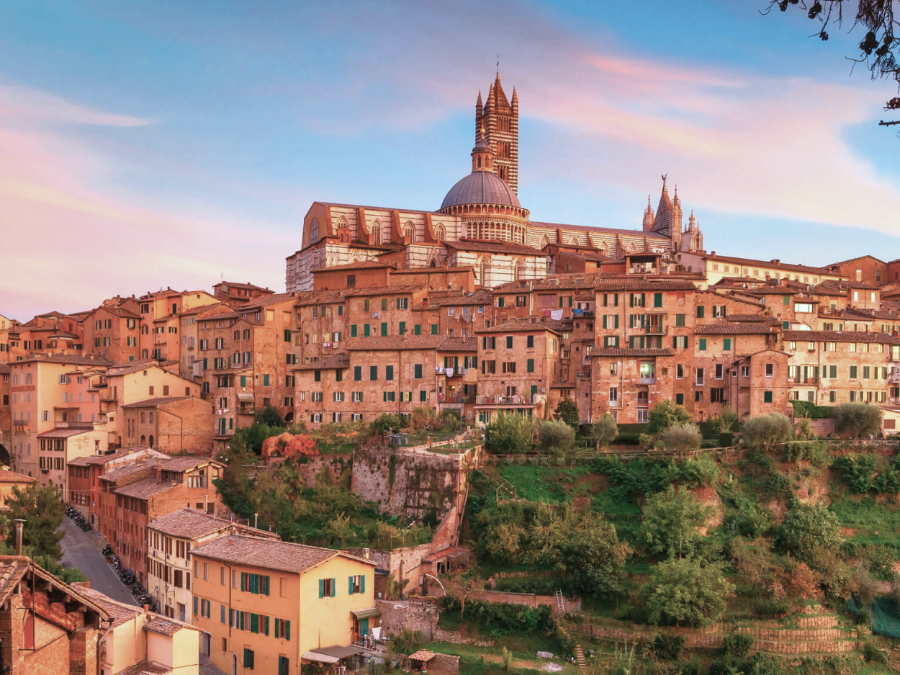
At sunset, there's nothing quite like sitting on the terrace of a café in Piazza del Campo, one of the most spectacular squares in the world. Shaped like a giant seashell, it is surrounded by medieval buildings. Its red-brick pavement, laid in a distinctive herringbone pattern and divided by marble strips, is filled with a lively crowd. As the afternoon fades, more and more people emerge from the winding, narrow streets to watch the softening light of the setting sun, as the beam of light crossing the square moves from the gilded Gothic cornice of the Town Hall to the top of the Torre del Mangia.
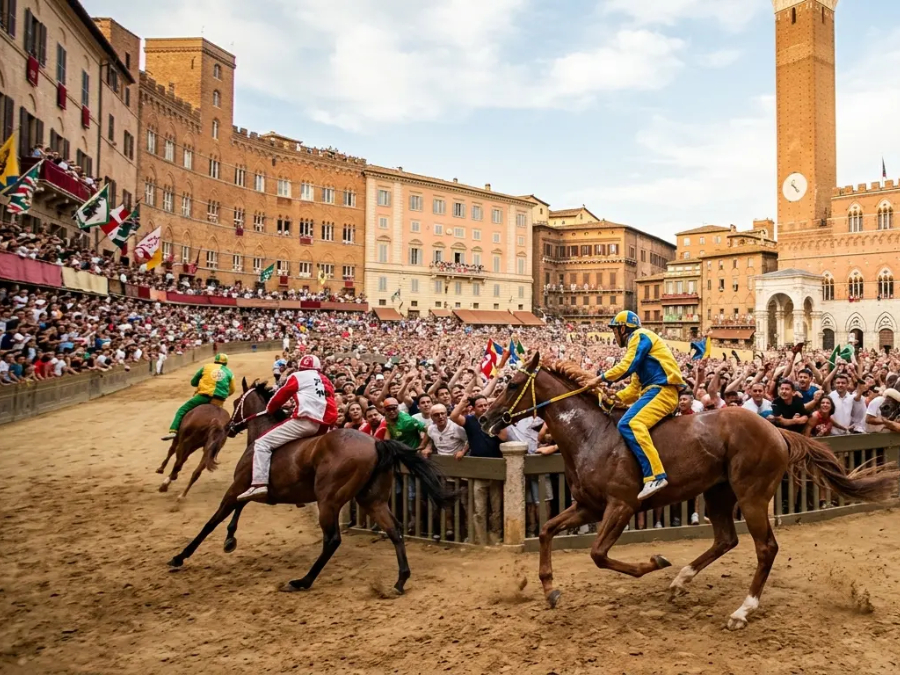
In the summer, on July 2 (Palio di Provenzano) and August 16 (Palio dell'Assunta), Piazza del Campo hosts the Palio di Siena horse race. This centuries-old tradition dates back to the 13th century, when riders raced on Barb horses and it is taken every bit as seriously as Italian football. Siena maintains a deep relationship with its past, holding firmly to its traditions. It is also the birthplace of Saint Catherine of Siena, one of Italy's patron saints. Not far from the city stands a Benedictine monastery, where, in one of his frescoes, Luca Signorelli portrayed the devil as an ordinary traveler. An Italian art historian once wrote that his face looks just like that of the first person you happen to meet. In Tuscany, deep religious devotion and wry skepticism have always coexisted. The message remains just as relevant today: the evil that threatens us does not necessarily smell of sulfur, nor do horns always reveal harmful intentions.
Siena, and even more so its surrounding countryside, is the ideal base for exploring Tuscany's iconic landscapes and its historic towns built across hills and valleys. From here, you can head north to discover the ancient Etruscan hill towns, or travel south into the UNESCO-listed Val d'Orcia, with its rolling hills and jewel-like villages. If you choose your accommodation well, you can spend your nights within the walls of a historic building, relaxing after a day of exploration while experiencing a little of the true dolce vita that the people of Tuscany live every day.
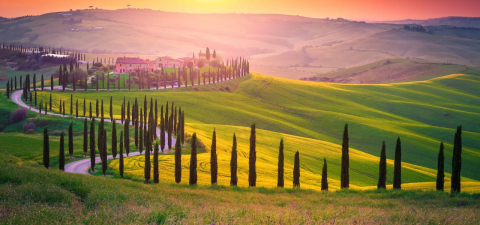
This place lies just northeast of Siena, about a twenty-minute drive away. Even the journey there feels like moving through the scenes of a film. Neatly ordered rows of vineyards follow the curves of the hills, the silvery leaves of the olive groves shimmer in the sunlight, and the wind stirs up dust above the freshly harvested wheat fields. The whole landscape carries an indescribable sense of calm. A peacefulness watched over by the cypress trees lining the roads, standing like disciplined soldiers who have kept guard for centuries. The noise of the modern world gradually fades away. Almost without thinking, you switch off the radio, and even the map on your phone begins to draw less of your attention. Before you realize it, you're breathing more slowly.
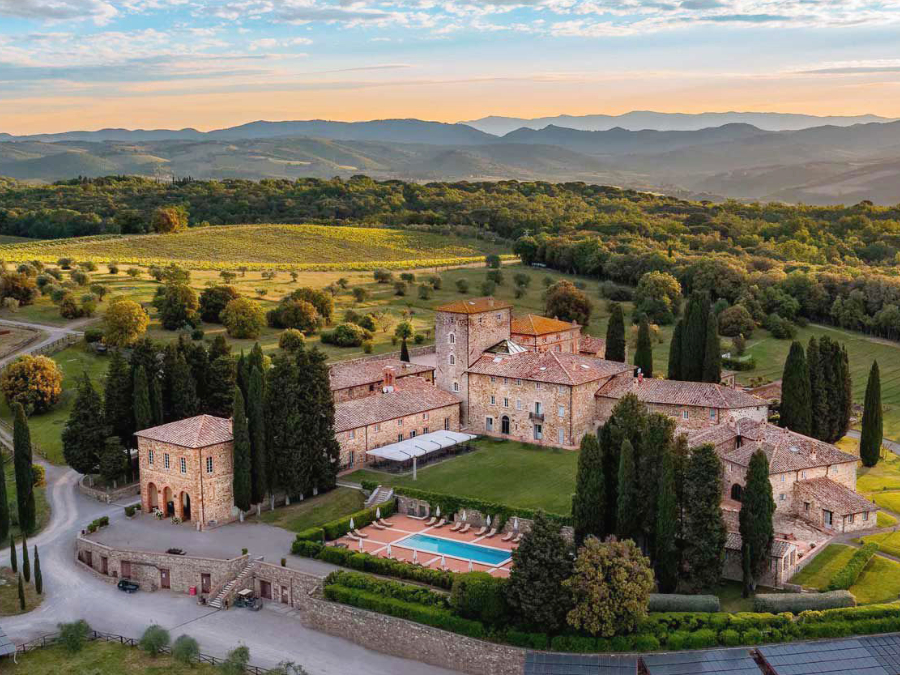
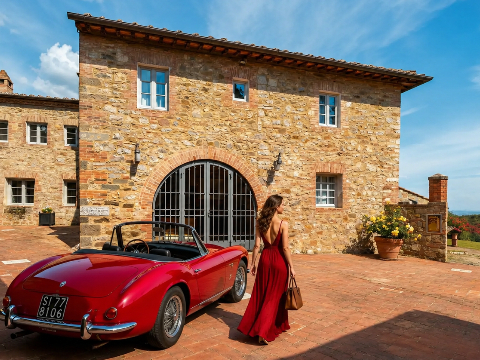
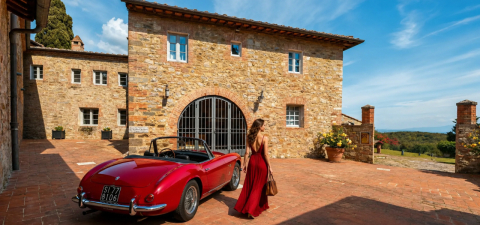
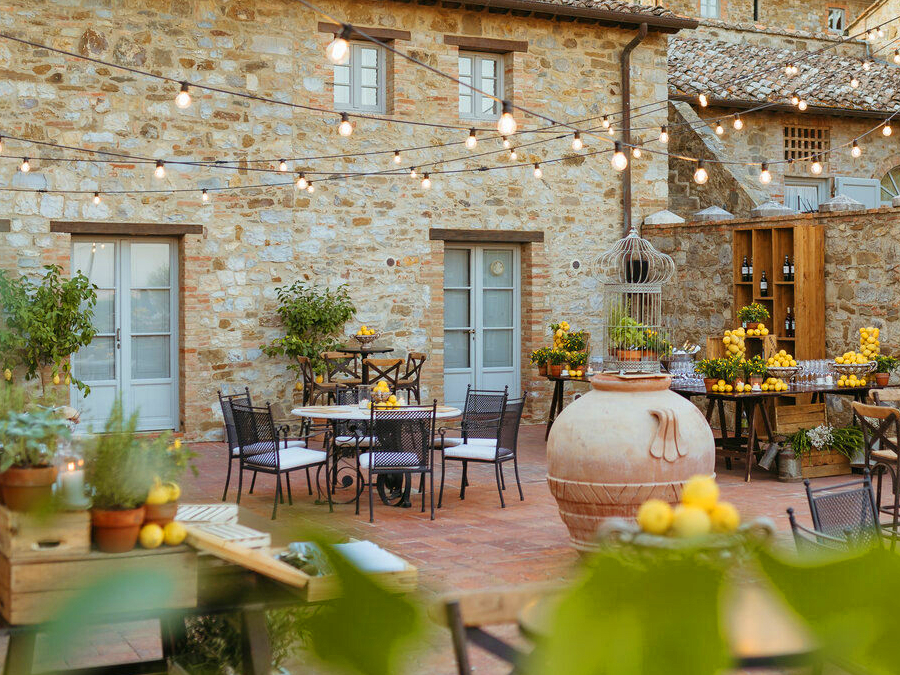
Then, suddenly an estate comes into view. The five-star Borgo Scopeto Wine & Country Relais is, in fact, a tiny medieval village that seems to have been forgotten by time. Stone walls, towers, shaded courtyards, a chapel, flower-filled terraces, and that kind of timeless elegance that no architectural concept can recreate. It is the kind of beauty that can only be shaped over centuries.
Borgo Scopeto is a luxury resort that naturally offers all the high-end amenities and services one could expect for complete relaxation and personalized comfort. But it also possesses something more, a special kind of charm that draws you away from the noise of the city. It gives you the time to lose yourself in the sunset without constantly checking your watch or thinking about everything you should be doing instead. In a separate article, we'll explore the secret of Borgo Scopeto Relais, and discover how a refined luxury hotel concept can coexist so naturally with simplicity, understated elegance, and a close connection to nature.
Fortress towns atop of hills
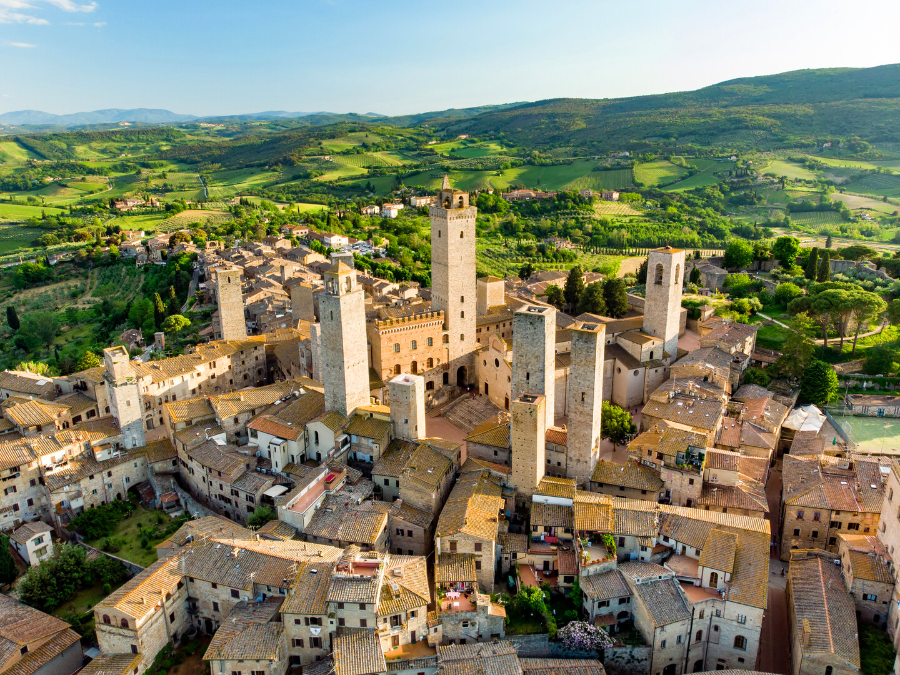
North of Siena lies San Gimignano, known as the "Town of Fine Towers." Like a miniature medieval New York, or perhaps a Cubist painting, it rises with fourteen square towers. These are all that remain of the more than seventy tower houses that once dominated the town before the Medici, rulers of Florence, ordered most of them to be demolished. What stories could these silent, imposing towers tell? Stories of bloody feuds and the fierce rivalries of powerful families competing for control. The town was originally built as a fortified settlement, its separate towers shaped by internal conflicts. San Gimignano owes its name to the Bishop of Modena who, according to tradition, protected the town's weary inhabitants from the invading Huns of Attila.
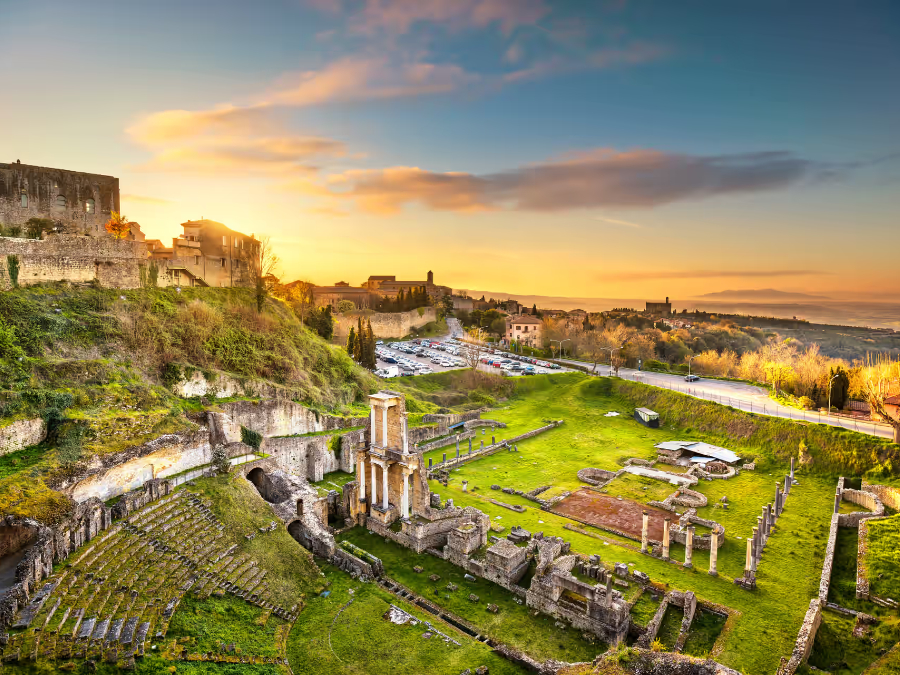
From here, it's only a short drive to Volterra, the Etruscan city. Of all the towns in Tuscany, it is perhaps the harshest, and the most haunting. Perched atop a windswept hill, it overlooks a desolate landscape of clay and marl. A medieval fortress town built on a hilltop as per Etruscan tradition, Volterra's main attraction is the Etruscan Museum, home to hundreds of funerary urns recovered from tombs in the surrounding area. They are among the few remains of one of the ancient world's most mysterious civilizations, as the everyday objects were made largely of wood and have long since been claimed by time.
Yet someone took a curious, elongated bronze figure with them into the grave: Ombra della Sera. Even its name is mysterious:"The Shadow of the Evening." Perhaps it was used in a ritual ceremony? When it was discovered in the 19th century, people believed it was nothing more than a fireplace poker, and that's exactly how they used it. Only later did they realize it was one of the finest surviving works of Etruscan art, an artifact of immeasurable value. Volterra is not only the city of the Etruscans, but also the city of alabaster. It is full of small workshops where craftsmen shape and polish the stone quarried from the surrounding hills. It is how many of them make their living. The artisans create the pieces, and the local shops sell them; statues, lamps, ashtrays, vases, and pitchers
Not only the everyday objects of the Etruscan civilization disappeared almost without a trace at the dawn of history, their language did as well. Yet during the first millennium BC, the flourishing Etruscan civilization not only predated Rome, but also profoundly shaped its development. According to the latest research, the Etruscans were a distinct cultural group within the Mediterranean, forming an independent cultural island while being strongly influenced by Mediterranean civilizations, especially the Greeks and the peoples of Anatolia. Their cities existed in a loose confederation, and many elements of their religion, rituals, and political symbols were later adopted by the Romans. Their language, however, was entirely unique. It is related neither to Latin nor to Greek. In this sense, Etruscan is an isolated language.
Roman towns in Tuscany were almost always built in the valleys. It was the Etruscans – and later the medieval towns – that settled on the hilltops. Here, nearly every hill is crowned by a tiny town proud of its ancient past. Artimino was once an Etruscan settlement; today it has shrunk into a village of just a few hundred inhabitants. It is a romantic little mountain retreat, especially in summer, when the fireflies glow at full brightness and the songbirds seem to compete with one another at dawn. Unlike San Gimignano, Montefioralle did not grow upward, it grew inward. From a distance, it looks like a single castle, its houses and churches packed so tightly together along narrow cobbled lanes that they appear to form one continuous stone wall.
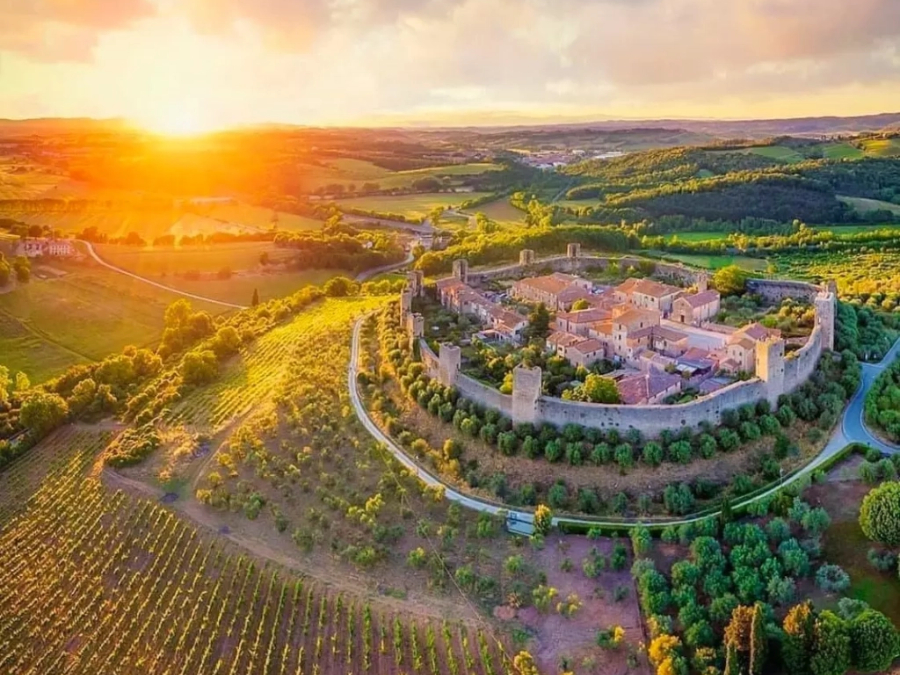
Monteriggioni is a little jewel. Though tiny in size, it is a miniature town, with two piazzas, a Romanesque church, and fourteen towers. In his Divine Comedy, Dante, a native of Tuscany, compared these towers to the giants standing around the ninth circle of Hell. Life here is peaceful, with the warmth and simplicity of a village. There are no supermarkets, only small shops, local taverns, and family-run trattorias, where the rustic vegetable bread soup, seasoned with olive oil and fragrant herbs, is simply outstanding. No famous restaurant can match the cooking found in the rustic, family-run eateries of the Tuscan hills. It's worth sampling the local cuisine wherever you go, because every town has its own specialties.
Sweet deja’vu
The Val d'Orcia, south of Siena, feels familiar at first sight, as if you've seen it before in a painting or an old photograph. That feeling is no coincidence. The gentle rolling hills and the orderly rows of cypress trees lining the roads together create the most iconic image of the Tuscan landscape.
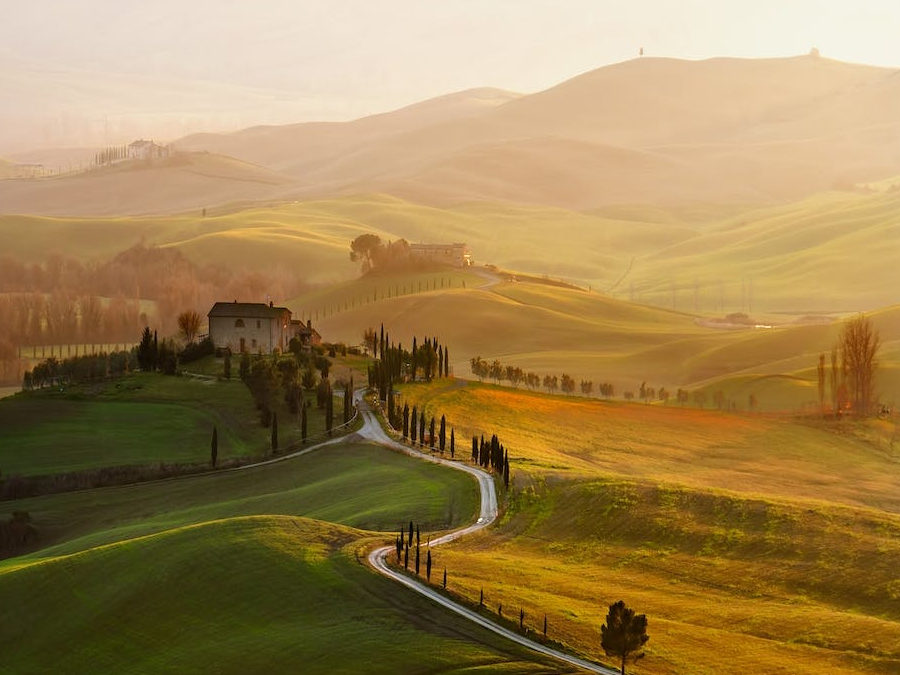
As we follow the winding road toward Pienza, the landscape opens up beside us, and the horizon seems almost endless. Driving at an unhurried pace, we lose ourselves in the familiar, yet endlessly beautiful scenery, until finally we find ourselves on the terrace of a roadside restaurant, a glass of sparkling Prosecco in hand, watching the rolling wheat fields sway in the breeze. This is where the magic of Val d'Orcia lies. Tuscany's thousand-year-old story lives on not only within its medieval stone walls and the winding streets of its hilltop towns, but also in this countryside, where farming remains a way of life to this day. Here, you don't feel the need to search for experiences. It is enough simply to be present – with open eyes and an open heart – to experience exactly what drew you here in the first place.
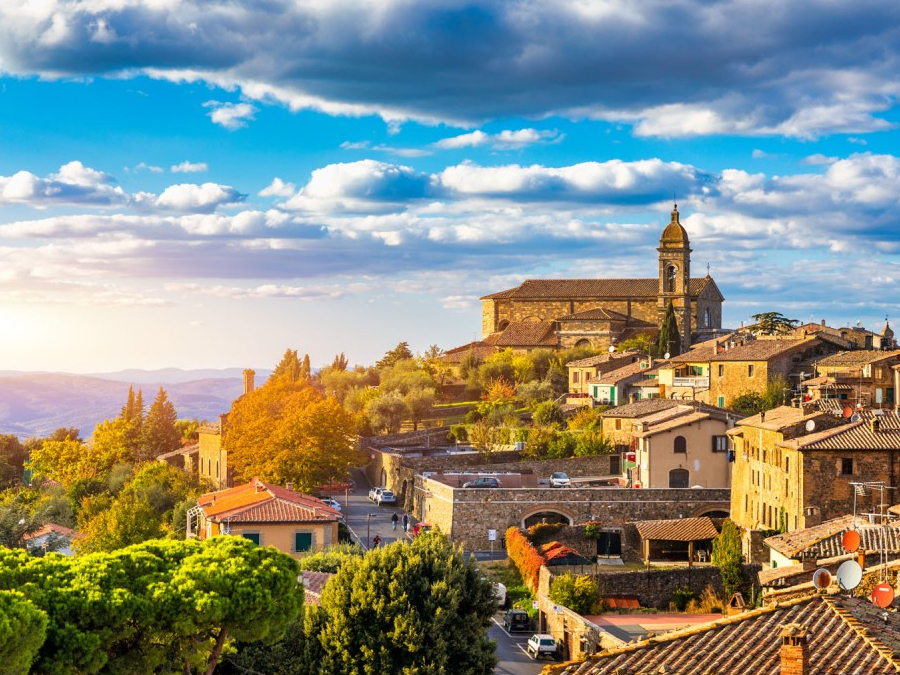
After a relaxing break and an excellent lunch, continue on to Montalcino, where you can wait for the sunset on the terrace of the charming boutique hotel and restaurant Il Giglio. As you sip your wine, take a moment to reflect on the deep red essence born from the earth, the sunshine, and the work of human hands. Spending a night within the thousand-year-old walls of Montalcino will surely become one of the most memorable moments of your journey.
Tuscan delicacies
Tuscany is living history, one of the enduring sources of European culture, and indeed of Western civilization itself. Yet even the long shadow cast by its remarkable past does not prevent the people who live here from finding joy in the simple pleasures of everyday life. Tuscany is the essence of celebrating life: a harmony of beauty, simplicity, and enjoyment, where every moment reminds us that life is meant to be lived deeply, sensually, and with passion. You can taste it in every dish placed on the table, and in every drop of the red wine served alongside it.
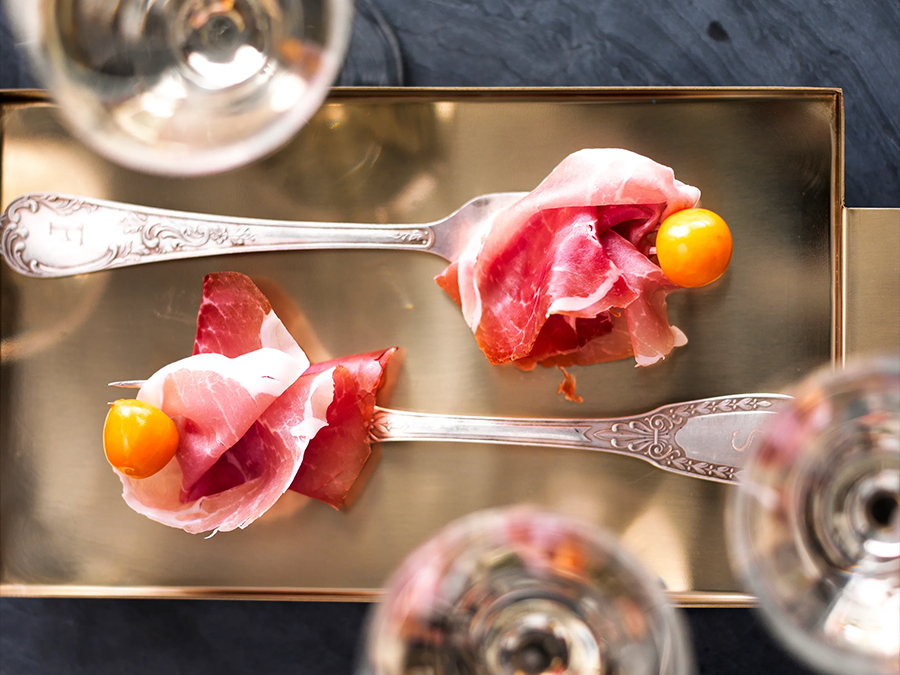
The essence of Tuscan cuisine is not complexity, but simplicity and respect for its ingredients. Bread, olive oil, legumes, seasonal vegetables, and high-quality meats form the foundation of a cuisine that is both humble and full of character. You could also call it home-style cooking, simple, hearty, and boldly seasoned, whether it's bruschetta or one of the region's many bread-thickened soups. The Tuscans, sometimes nicknamed "bean eaters," never leave fagiolini (green beans) off the table, most often served cold with generous amounts of olive oil. Fagioli, or white beans, are just as essential, appearing in countless forms; as salads, soups, or side dishes.
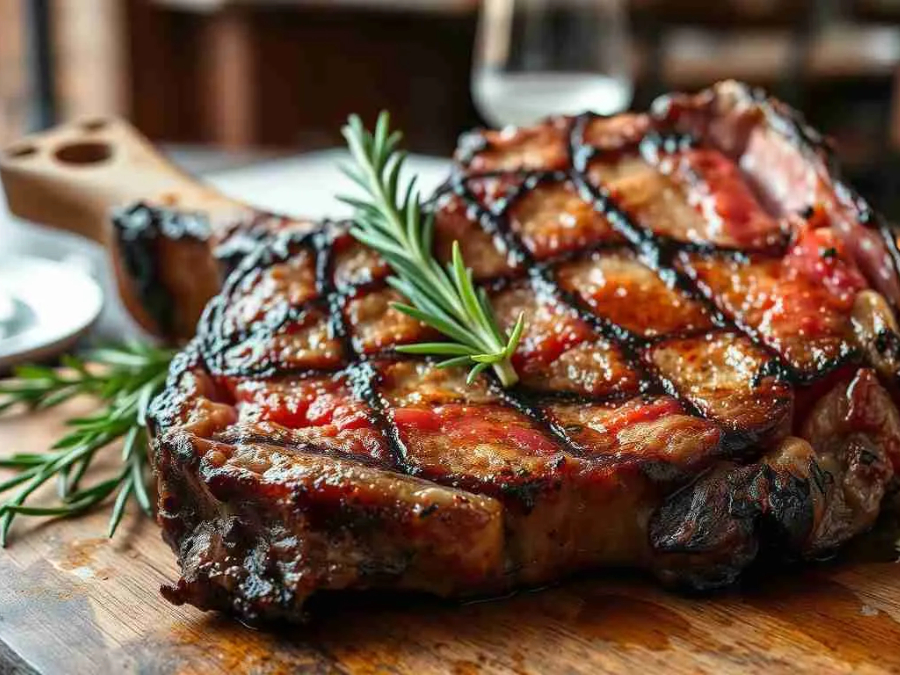
In Lucca, don't miss the corn soup. In Arezzo, try the rabbit ragù served with tagliatelle. In Florence, the Bistecca alla Fiorentina, a thick steak marinated in olive oil, generously seasoned with garlic, and grilled over charcoal, evokes the atmosphere of the Renaissance. Siena is famous for its dessert, panforte, a honey-and-nut cake similar to fruitcake, once eaten by pilgrims on their journeys.
Today, the artichoke is a popular ingredient throughout Western cuisine, but the Tuscans have been using this fiber- and antioxidant-rich vegetable for centuries. Braised in olive oil, it makes a light and flavorful dish, and it is also served alongside roasted meats instead of the vegetable stews that are common elsewhere. Even the chicken tastes different here. Perhaps because they put everything into it, mushrooms, tomatoes, shallots, herbs, and even thin strips of ham. Tuscan cuisine is also exceptionally rich in seafood. From fish stew to squid and prawns, seafood is typically prepared with tomatoes, onions, and plenty of garlic. And alongside it, there's always a glass of Chianti or Brunello. It's simply impossible to get enough of it.
Marble and the sea
Tuscany's remarkable geography – and its surprising shifts in mood and color – reveal themselves most fully as you descend from the hills toward the sea. Along the way, make a detour to Vinci and Certaldo. There may seem to be nothing extraordinary about either town, but it's worth paying tribute to Leonardo da Vinci, who was born in Vinci, and to Boccaccio, Certaldo's most famous son, whom this landscape inspired to write the mischievous tales of the Decameron.
Carrara is a charming and vibrant town, the marble capital of the world. Its name comes from the ancient Etruscan word "kar," meaning stone. Even the Romans quarried their finest marble here for statues and palaces. Michelangelo himself spent days in these quarries, personally selecting the perfect block of stone from which he would later carve his greatest masterpieces. In Carrara, everything is white. The mountains shine with the whiteness of marble, and even the mountain stream flowing through the town appears snow-white. In its waters, craftsmen working in the nearby workshops cool their cutting tools. To this day, around half a million tons of marble are shipped each year from these world-famous quarries to destinations across the globe. Today, however, the stone is no longer extracted with hammers and wooden wedges, but cut using wire saws hundreds of meters long.
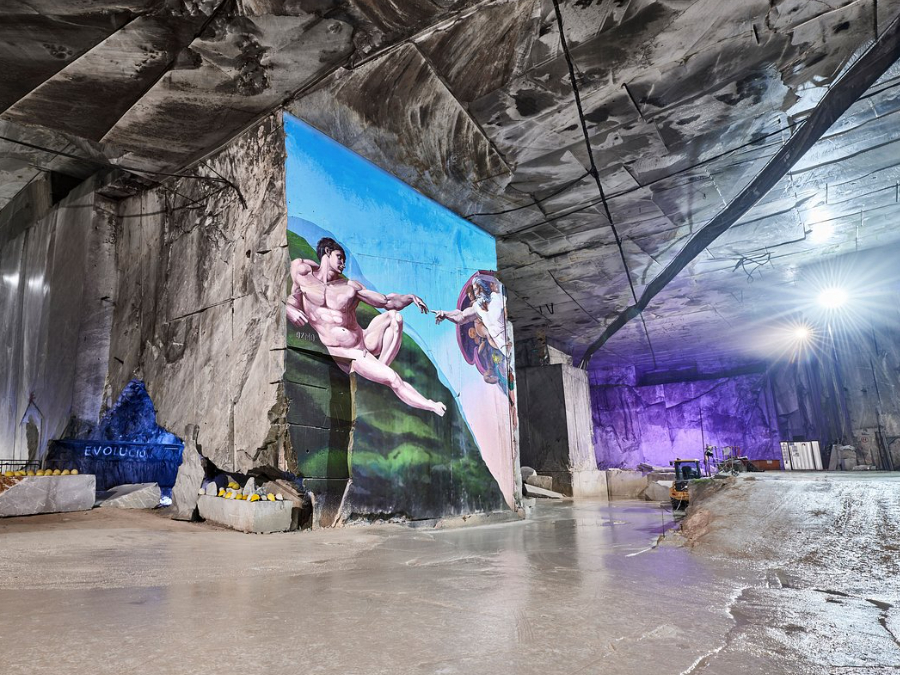
Descending into one of these gleaming white quarries and standing before the gigantic blocks of freshly cut marble is as breathtaking an experience as gazing at Michelangelo's David in Florence. But it took a Michelangelo to bring such perfection to life from cold marble. Both – the marble and the artist – were born in Tuscany.
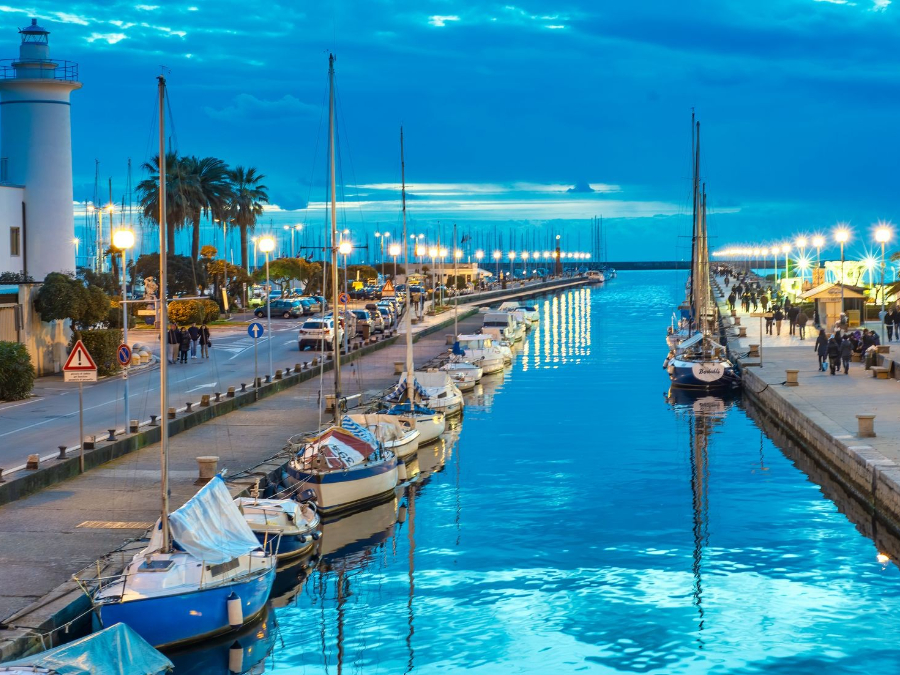
Viareggio is the jewel of Versilia, Tuscany's Riviera, and a town renowned for its festivals. Sandy beaches, a sparkling blue sea, green parks and promenades, with the majestic peaks of the Apuan Alps rising in the background. After a swim, there's hardly a greater pleasure than sitting on the terrace of the Gran Caffè Margherita, with its colorful ceramic tiles. It was once a favorite meeting place of Puccini, who regularly dined here with his friends. If you haven't discovered the Italian dolce vita by now, you'll certainly understand it in Viareggio. Its Art Nouveau promenade, the luxury boutiques and elegant villas of Forte dei Marmi, and the art galleries of Pietrasanta are all expressions of the same relaxed Mediterranean way of life, one that embraces living each moment more slowly, more fully, and more sensually.
Tuscany truly is extraordinary. Its towns are not empty monuments, but living history itself. The ground beneath your feet still seems to carry the footsteps of those who shaped the world. The church bells echo the name of Puccini. The shadow of Michelangelo still lingers over the snow-white marble blocks of Carrara's quarries. In Siena, they still speak the language of Dante and Petrarch in its purest form. Here, the fiery preacher Savonarola denounced the papacy before being burned at the stake. Here, Galileo Galilei wrote that it is not the Sun that revolves around the Earth, but the Earth around the Sun. To him is attributed the famous phrase: "Eppur si muove" – and yet it moves.