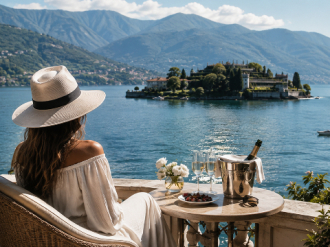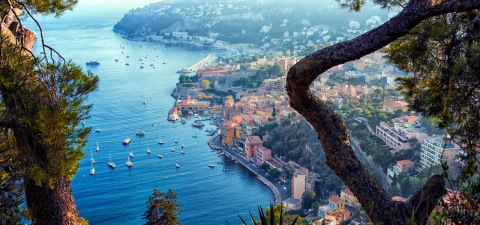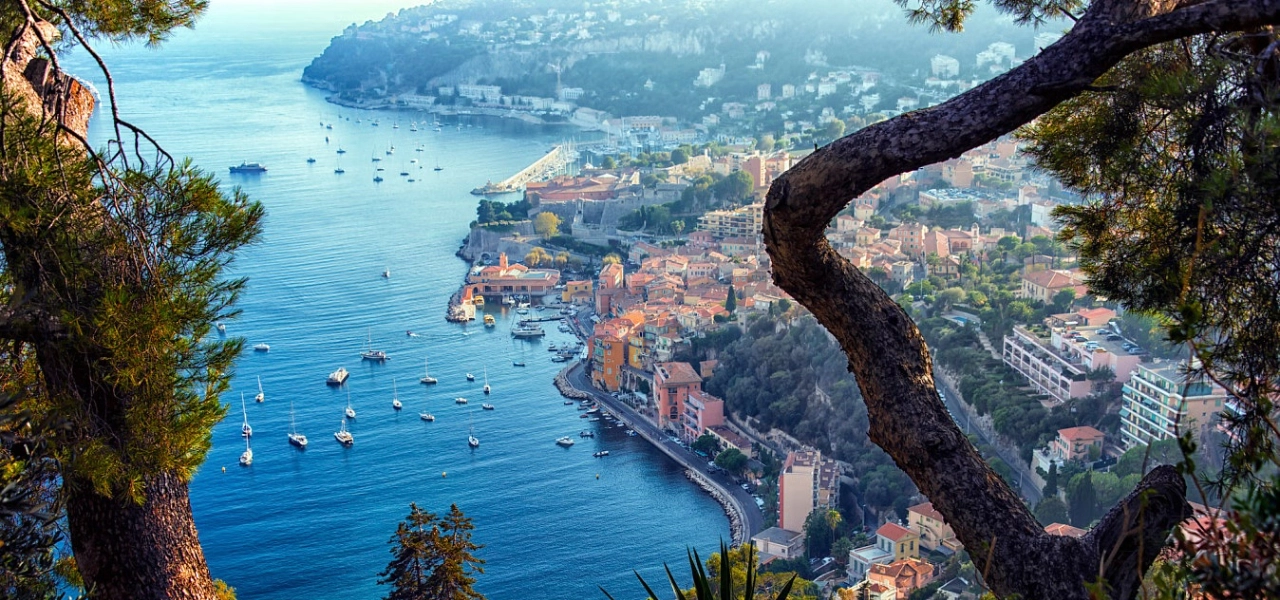
Luxe, calme et volupté – splendor, tranquility and pleasure.
Baudelaire, the genius of French poetry, expressed in words what the great masters of 19th-century French painting conjured onto their canvases about the French Riviera. They were the ones who created the myth of the Riviera, that unique way of life whose allure still captivates us today. It is a joy to dissolve into the azure blue, to revel in the splendor of the Mediterranean summer, while the silence of tranquility can be found in the peaceful, spice- and lavender-scented mountain villages of Provence.
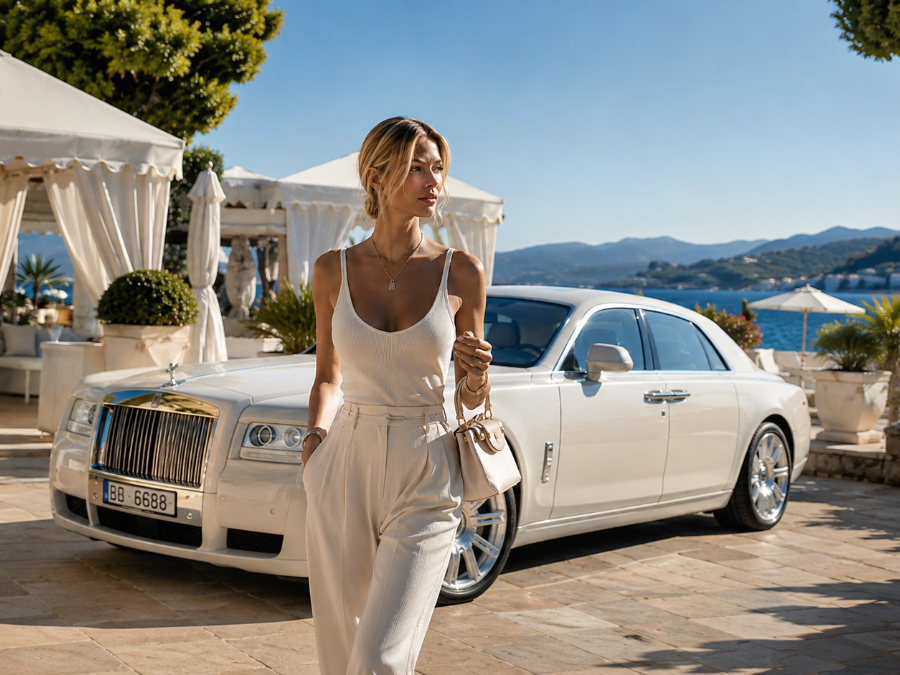
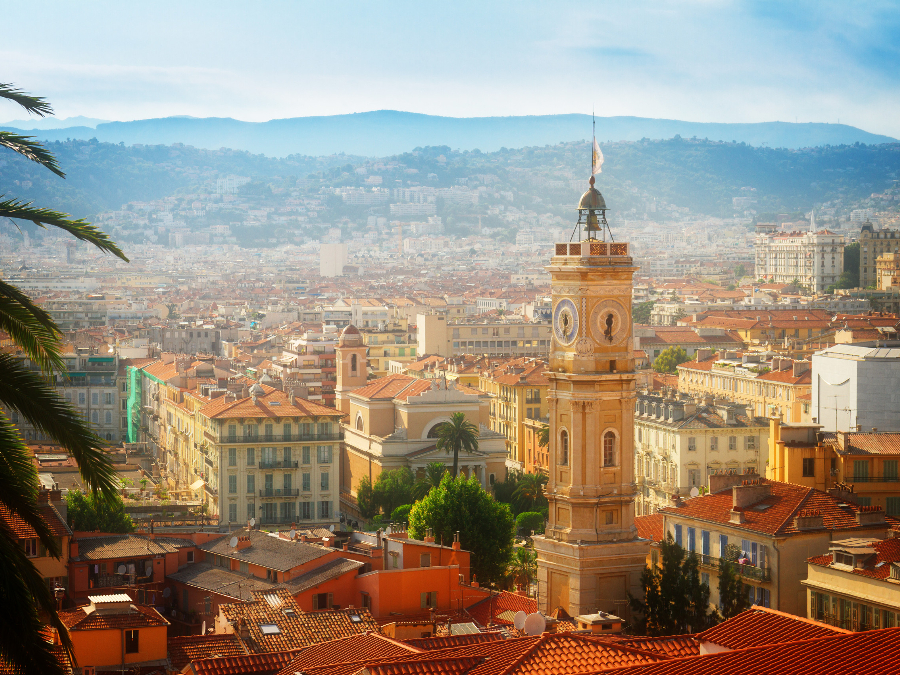
The Promenade des Anglais, American stars, Arabic cafés, Turkish vendors, Russians, Japanese, Picasso pilgrims, culinary enthusiasts. Just like at all the world’s seaside resorts – but Nice has long been accustomed to the great comings and goings of different peoples. It wasn’t the French who discovered its excellent location and climate, but the English – specifically Queen Victoria, who would retreat here every year for six weeks with her entire court. Thanks to her, the city became the most significant tourist center of the stunning Côte d’Azur from the mid-19th century onward. Private villas and luxury hotels began to spring up, all in the style of the belle époque, the “good old peaceful days.” The first was the Hotel Negresco, unmatched in elegance to this day. Besides the English, the Russian aristocracy also gained great influence: in 1912, their onion-domed church – with six domes – was inaugurated in the presence of the Tsar’s family.
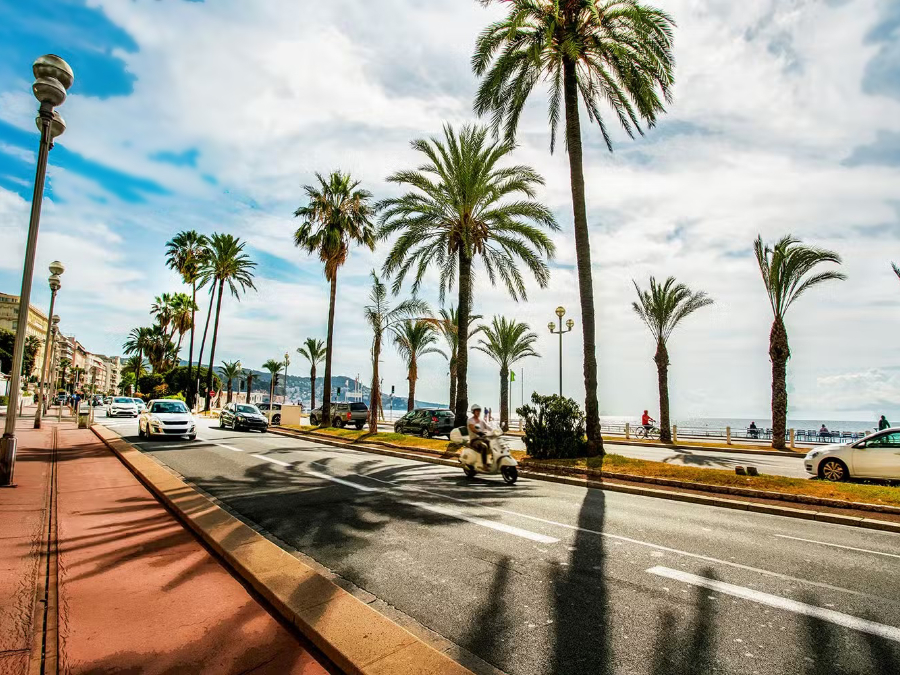
Promenade des Anglais, Italian old town
Nice is a city of many faces: the Promenade des Anglais, following the graceful curve of the Bay of Angels, is perhaps the most beautiful in the world. In our great-grandmothers' time, elegant ladies strolled along it in floor-length white dresses, huge white hats, and carrying parasols. In those good old days, it was considered improper for women to show more than that. Now, among backpack-wearing, boot-clad tourists, girls on rollerblades glide by – wearing almost nothing.
The old town of Nice is a little slice of Italy, with its markets, charming little shops lining the narrow streets, winding alleys, and brightly colored houses in vivid, shouting hues. You can spend all day shopping for all sorts of things: Provençal spices, lavender in colorful cloth sachets, honey-yellow faience bowls, textiles, Niçoise olives and extra virgin olive oil, chocolate-covered almonds… It’s here that we begin to understand what first drew the Impressionists to this place – and later, some of the greatest names of modern painting in the last century, like Renoir, Picasso, Chagall, and Matisse, who chose Baudelaire’s words as the title for one of his most beautiful paintings: "Luxe, calme et volupté"
From fishing village to world-famous resort town
How did Cannes transform from an insignificant little fishing village into a glamorous seaside resort – and so quickly? It all began in 1839, when a British statesman, Lord Henry Brougham – the man after whom the two-wheeled carriage was named in Victorian England – set off on holiday to Nice with his daughter. But due to a cholera outbreak, the border was closed, and they ended up stranded in Cannes. While waiting, Lord Brougham was so captivated by the beauty of the landscape that he decided to spend the rest of his life there. Many English aristocrats followed his example – and what better advertisement could there be to boost a winter holiday destination? Even before World War I, the stunning Croisette seaside promenade had been built, lined with elegant villas and luxury hotels in the belle époque style.
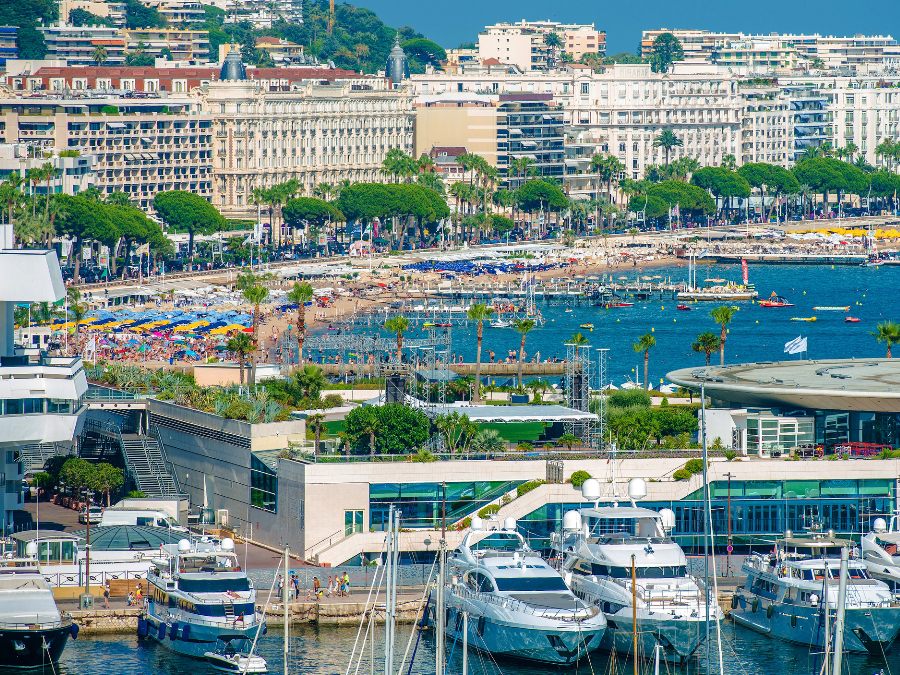
Cannes’ fame grew even more after World War II, when it was chosen as the capital of France’s emerging film industry. Since then, every May, the elite of international cinema gathers here, and the Palme d’Or, the top prize of the festival, now rivals the Oscar in prestige. Nice is refined, steeped in history and art. Cannes, on the other hand, is more cosmopolitan, more showy, proudly declaring: “The city where life is so good...” Especially for locals during festival season, when it’s easy to bump into celebrities at every turn – often followed closely by crowds of festival tourists eager to catch a glimpse.
Red cliffs and nostalgia
Those traveling between Nice, Cannes, Monte Carlo, and Saint-Tropez should definitely make a stop in Saint-Raphaël to see one of the highlights of the Corniche d’Or: the two red cliffs. One is called the Lion of the Earth, the other the Lion of the Sea. About ten kilometers further, near Le Dramont, stands a memorial to the Allied landing of August 15, 1944. At Agay, you’ll find a memorial plaque to Antoine de Saint-Exupéry. The author of The Little Prince and Night Flight departed French airspace from here – before disappearing forever over the Mediterranean Sea.
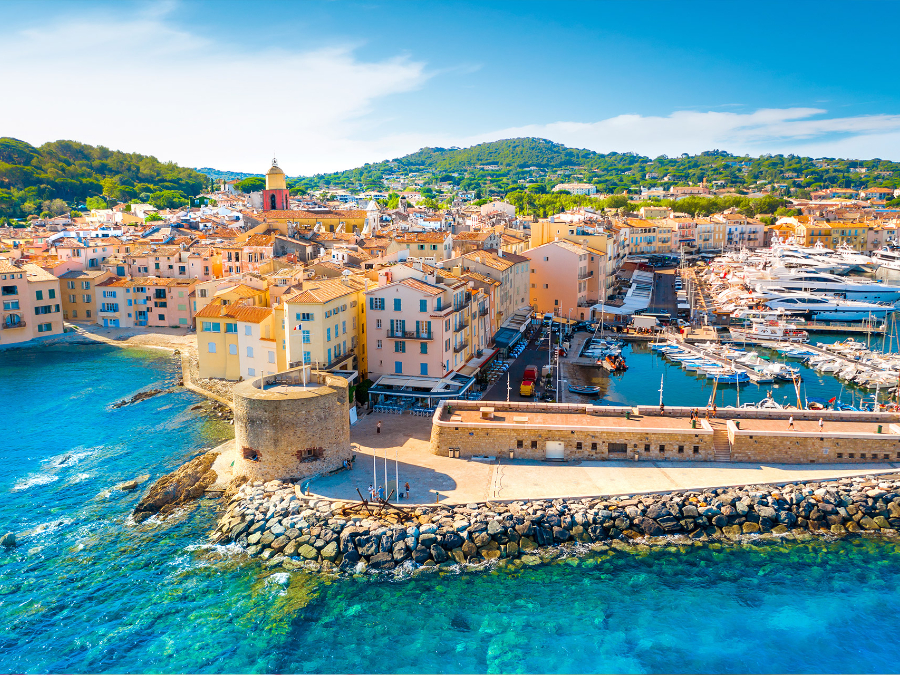
The must-visit seaside destination on the western coast is Saint-Tropez, once a quiet little fishing village, until Brigitte Bardot woke it from its Sleeping Beauty slumber in the 1960s. Scandalous parties followed one after another; this was the birthplace of the infamous topless craze, and the enduring BB cult began here. Although the town has lost much of its former glamour, Brigitte Bardot’s name still draws crowds – both the young, and the nostalgic older generations.
Between Cannes and Nice, nestled in the hills, lies Vallauris Picasso’s town, and one of the sacred centers of French ceramic art and craftsmanship. In the main square stands the master’s bronze statue “Man with the Lamb”, and just to the right, in a small square, is a 16th-century château whose crypt houses Picasso’s monumental fresco, “War and Peace,” spanning three entire walls. You won’t leave empty-handed from here either – young artists display their works everywhere, in the streets and doorways. And if something catches your eye, don’t hesitate – you can bargain for it.

Grasse is the perfume capital of France – yet another temptation to spend. From afar, you can already catch the scent wafting from the 20,000 hectares of flower gardens, and the sea of roses, carnations, mignonette, jasmine, and violets is just as stunning in its riot of color. Most of the still-operating perfume factories welcome visitors, provided you purchase a small token. Of course, few women settle for just a trinket once they’ve stepped into the kingdom of exquisite fragrances. Many painters and artists not only shared a devotion to their love of the beautiful Azure-land, but expressed their gratitude aswell: Like Picasso, Matisse decorated a chapel in Vence, Chagall gifted a valuable collection to the city of Nice, and the great artists even thanked local restaurateurs for a charming evening with original works of art.
Mini-state and great power
Just twenty kilometers from Nice, we leave French soil and enter the territory of the Principality of Monaco. The Principauté de Monaco, the tiny state ruled by the Grimaldi princes, owes its global fame to gambling. It’s a place you can explore in a single day – but in that time, you could either end up broke or fabulously wealthy, depending on how you fare in the most famous building of the capital, Monte Carlo’s Grand Casino.
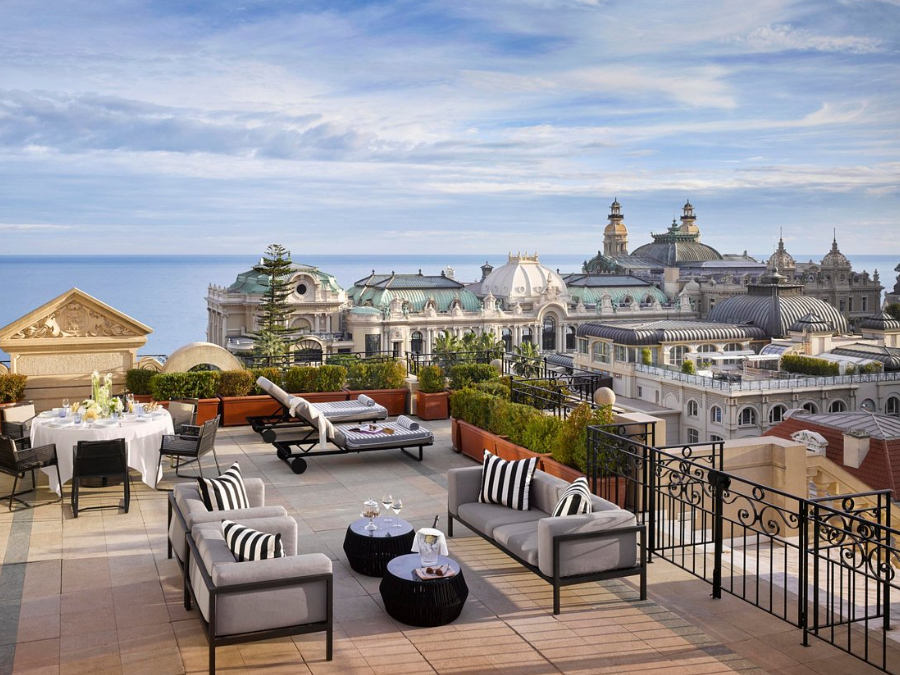
Of course, this danger only threatens those playing high stakes – financial ruin is a privilege of the very rich. Tourists aren’t even allowed into the innermost gambling rooms, where millions can change hands in moments. Only those who exchange large sums for chips are granted entry, and it's likely their financial background is discreetly checked as well. Appearances can be deceiving – since evening gowns are mandatory for women, and tuxedos or dark suits with ties for men. The casino itself was designed by Charles Garnier, architect of the Paris Opera – and it shows: lavish, almost operetta-like in its excessive ornamentation. The whole scene feels like something out of a movie: elegant gamblers, croupiers, towering stacks of chips, cigar smoke, a buzz of electric tension in the air, perfume and sweat...
The Prince’s Palace is open to visitors in the summer – except for the private apartments. It truly resembles a fairy-tale royal palace, filled with treasures and portraits of Grimaldi ancestors lining the walls. Yet, what everyone secretly hopes for is to see the unforgettable Grace Kelly step into the room. In contrast, the Grimaldis commemorate her rather modestly. At exactly 11:55 a.m., the changing of the guard begins in front of the palace, performed by the white-uniformed guards known as the Carabiniers. Also well worth a visit is the Oceanographic Museum, where 64 aquariums showcase the full richness of the Mediterranean’s flora and fauna.
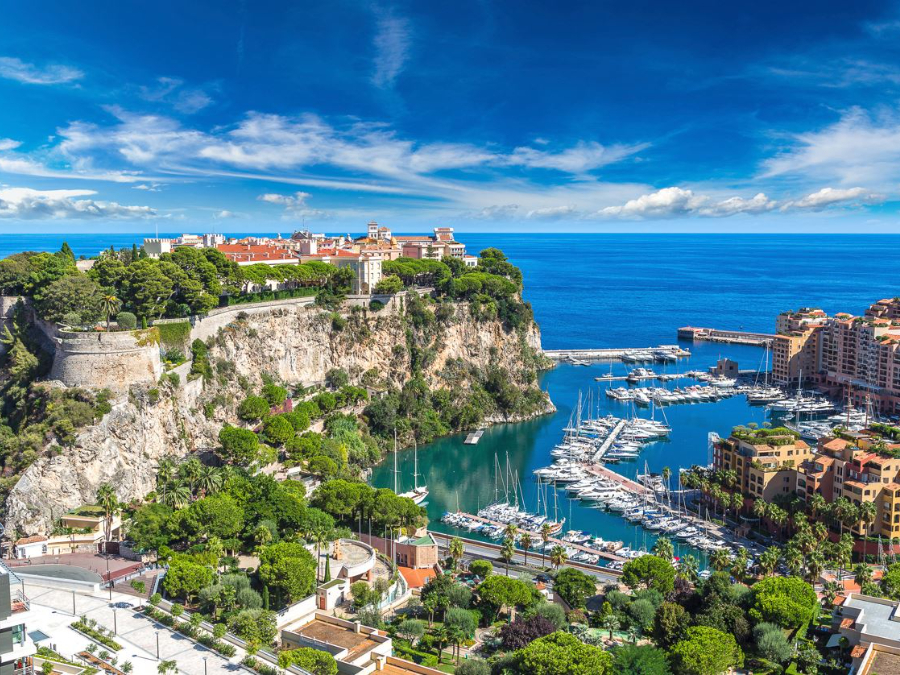
We leave the principality, and just like that, we’re in Menton – a charmingly elegant resort town. Maupassant once called even its cemetery the most aristocratic burial ground in Europe. This is the land of oranges and mandarins, where lemons are harvested all year round. Just before it, the Cap-Martin peninsula juts out into the sea. Beneath its shady trees, peace and quiet reign. As we leave Menton, just a few kilometers away, beyond the Red Cliffs, the other side of the Saint Louis Bridge is already Italy.
What to eat on the Riviera?
The Riviera offers a wide range of dining options, from simple bistros to elegant restaurants serving the most flavorful French dishes with refined presentation. The “prix fixe” fixed-price menu usually features excellent quality, with most dishes being local specialties. The two key words to know are Provençal and Niçoise – meaning cuisine from Provence or Nice. Both styles are based on the magnificent Mediterranean blend of olive oil, onions, fresh tomatoes, black olives, and savory herbs typical of southern France.
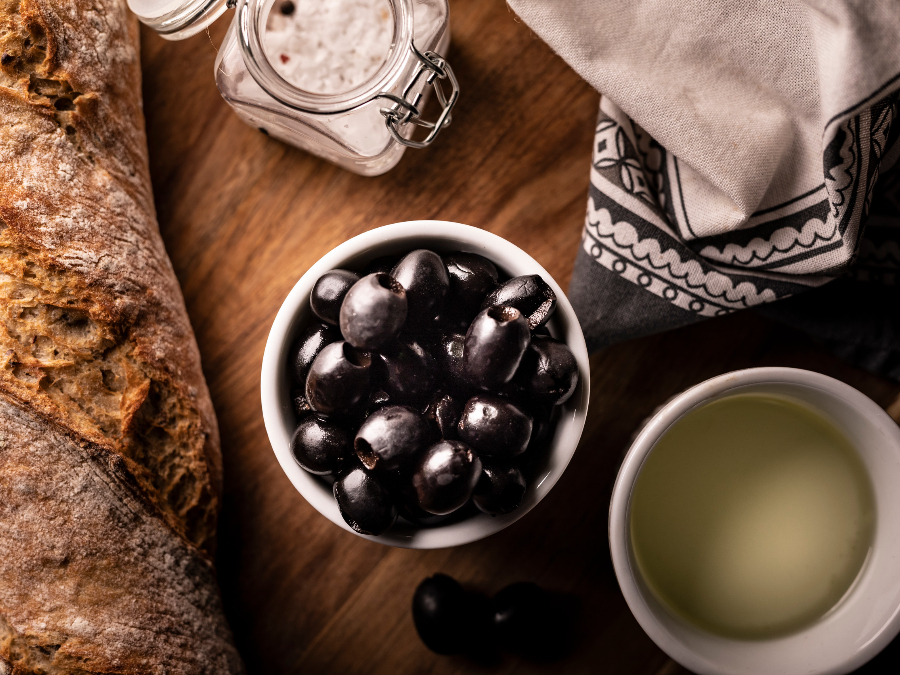
The Niçoise cuisine is unique in its preparation – its most famous dish is the Niçoise salad, made with tomatoes, green beans, French radishes, peppers, black olives, hard-boiled eggs, tuna, and olive oil. Provençal cooking is simple and rustic. You can try these dishes in the small inns of Nice’s old town. Some highlights include: Socca: a chickpea puree flatbread cooked over a wood fire; once known as the poor man’s bread, it’s now a delicacy for gourmets. Pan Bagnat: bread fried in olive oil with onions, tomatoes, and black olives. The region also boasts wonderful fresh seafood and fish, along with delicious baked goods like crispy baguettes, ripe, flavorful cheeses paired with light wines. For dessert, try Haagen-Dazs ice creams, almond pastries, and fresh fruits.