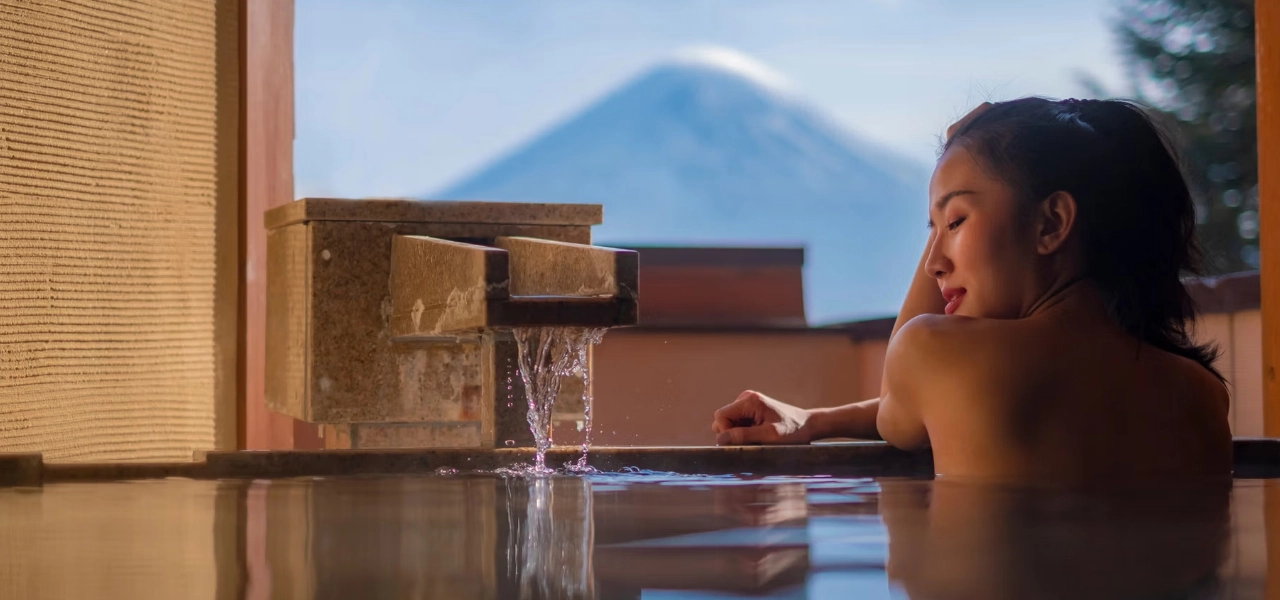
In Japan, an onsen is not merely a bath; rather, it is an aesthetic and spiritual experience that connects us with nature and guides us back to inner harmony.
The Land of the Rising Sun boasts thousands of hot springs, ranging from simple natural warm-water pools to exclusive, high-end spas. Immersing yourself in one can become one of the most memorable and intimate rituals of a journey through Japan. Some of the most captivating sights are the outdoor baths and natural pools nestled into mountainsides, often embraced by spring cherry blossoms, with volcanoes, ocean bays, or mystical forests emerging on the mist-shimmering horizon behind them.
A Sanctuary of Contemporary Minimalism
Hidden among the protected hills of Ise–Shima National Park, above the pearl farms of Ago Bay, Amanemu has become an icon of modern Japanese wellness culture. True to the philosophy of the Aman hotel group, everything here centers on quiet seclusion and the harmony between architecture and the natural landscape: black cedar buildings, low rooflines, and sweeping panoramic views frame the outdoor pools fed by natural thermal waters.
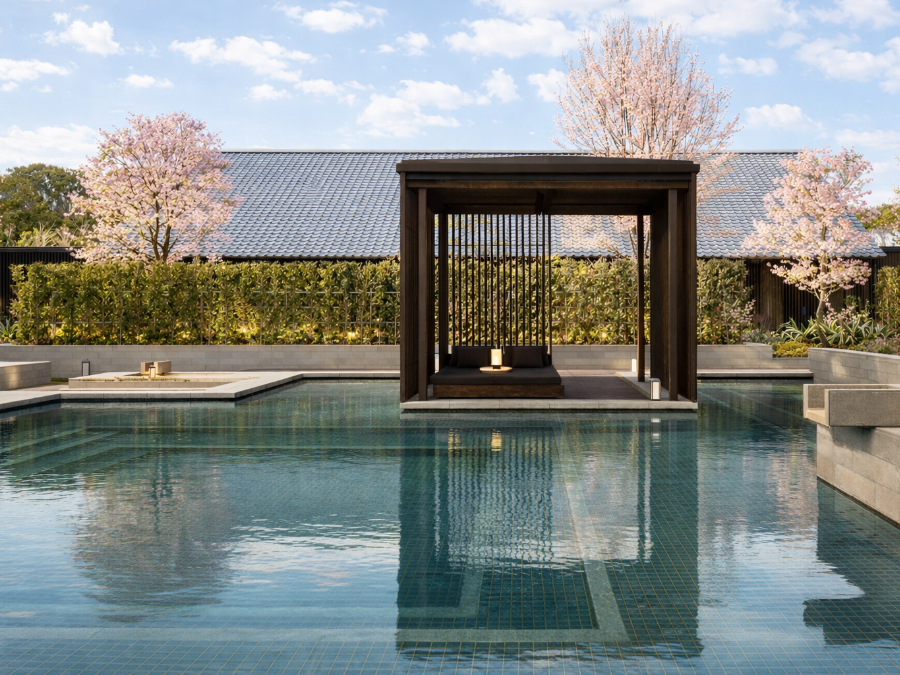
From the private onsen pavilions, the view over the sea becomes especially mesmerizing in spring, when a pink veil of blooming cherry trees drifts above the water throughout the park. The experience here does not evoke the traditional world of the ryokan; instead, it places bathing in a far more intimate, almost meditative setting⎯a contemporary sanctuary where mineral-rich spring water and profound silence offer a glimpse into a rarefied world of luxury.
Bathing at the Foot of Mount Fuji
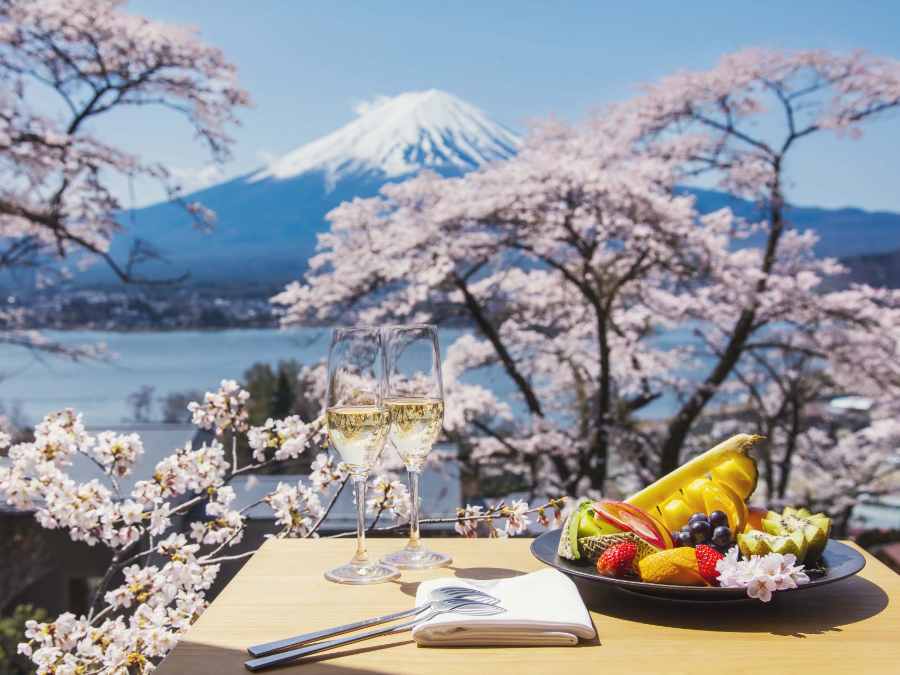
Perched on forest-cut terraces above Lake Kawaguchi, Hoshinoya Fuji became known as one of Japan’s first “luxury glamping” resorts, yet its true distinction lies in the open-air baths found here. Watching Mount Fuji emerge through the morning mist while soaking in the thermal waters is a captivating experience⎯one that only a handful of places in the world can offer.
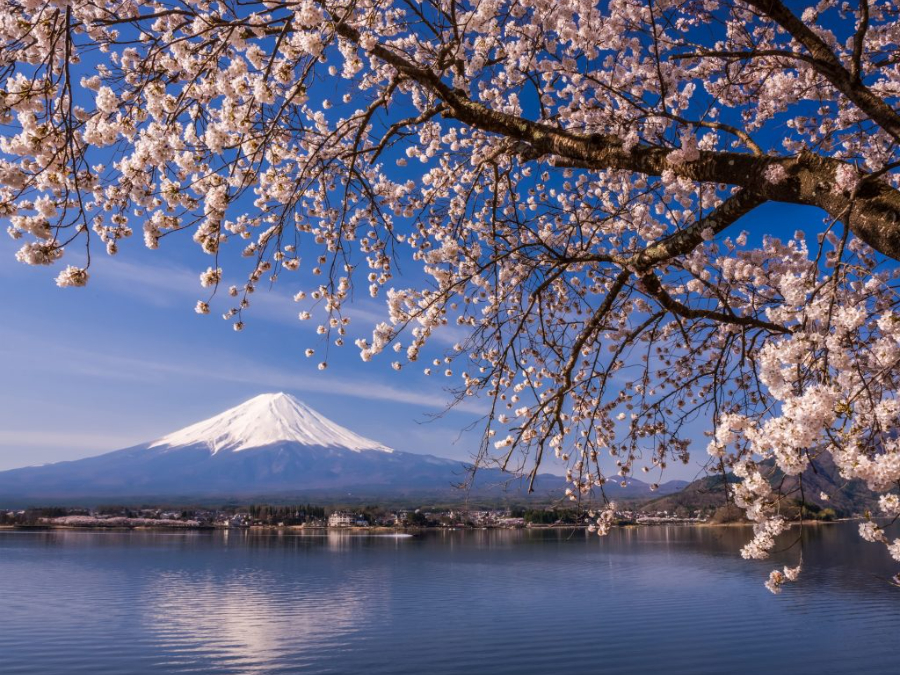
The spring cherry blossoms make the moment even more extraordinary. During this season, the surrounding hills are draped in pastel pink, and the lake’s surface reflects the flowering trees and the sacred volcano like a mirror. It’s no wonder that experienced travelers consider the area around Lake Kawaguchi one of the ideal spots to combine hanami⎯the enjoyment of cherry blossoms⎯with the immersive experience of Japan’s onsen culture.
Minimalism in the Shadow of a Blooming Mountain
Nestled in the quiet valley of Yamashiro Onsen in Ishikawa Prefecture, Beniya Mukayu is a luxury ryokan whose architecture blends almost imperceptibly with the natural surroundings. The hotel and baths feature modern designs rooted in traditional Japanese architecture, following the contours of the hillside and merging seamlessly with the forest. The rotenburo, or open-air baths, sit just above the forest canopy, offering direct views down into the valley below.
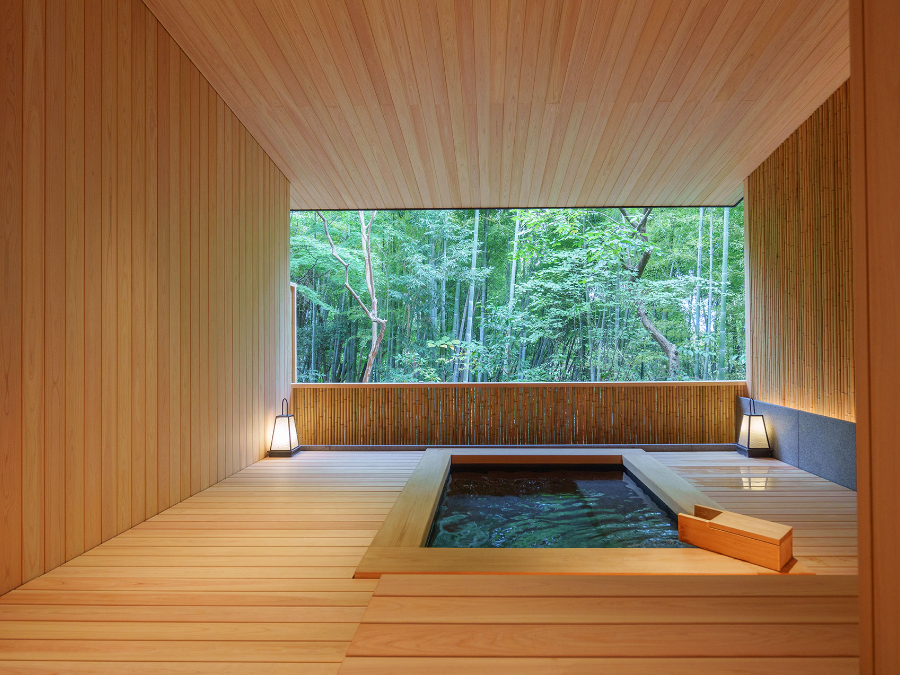
In spring, the hillside cherry trees create a breathtaking spectacle, as a cascade of pink petals floats on the water’s surface, set against the lush greenery of the distant Kakusenkei Gorge. The nearby Yamanaka Onsen, with a history spanning over 800 years, stands as a testament to this region’s centuries-long role as a home to some of Japan’s most esteemed bathing traditions.
White Springs and Cherry Blossoms
Hidden deep in the Japanese Alps near Matsumoto, Awanoyu stands out among hot spring baths for its unique character: the water here is naturally milky white, surrounded in spring by the snow-white and pale pink blossoms of the nearby forests. The open-air baths, tucked close to mountain streams, offer a bathing experience completed by the gentle murmur of flowing water and petals fluttering in the breeze.
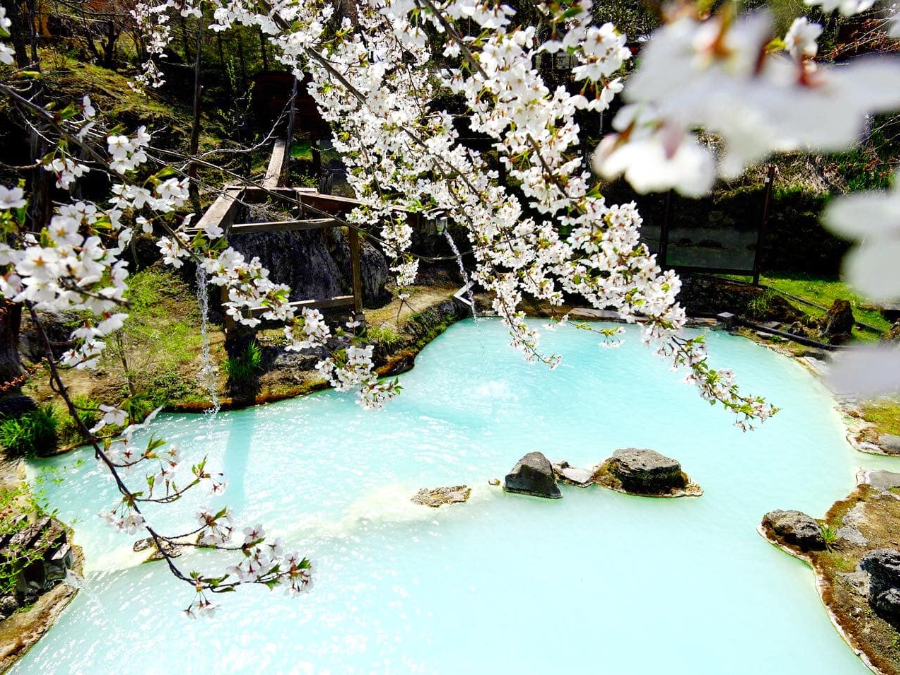
The ryokan, with a history of over a century, has retained its authentic character, while the panoramic views from the outdoor baths in spring unfold like a scene from a storybook, with blooming cherry trees and misty distant mountain ridges creating a cinematic backdrop.
Bathing on Japan’s Iconic Mountain
If there is a place where onsen bathing and cherry blossoms merge in perfect harmony, it is Yoshinoyama. Thanks to tens of thousands of cherry trees, this mountainside is one of Japan’s most legendary sakura destinations. At this time, the views from the open-air baths at Yumoto Hounoya are nothing short of magical, like the dramatic setting of a whimsical, otherworldly realm.
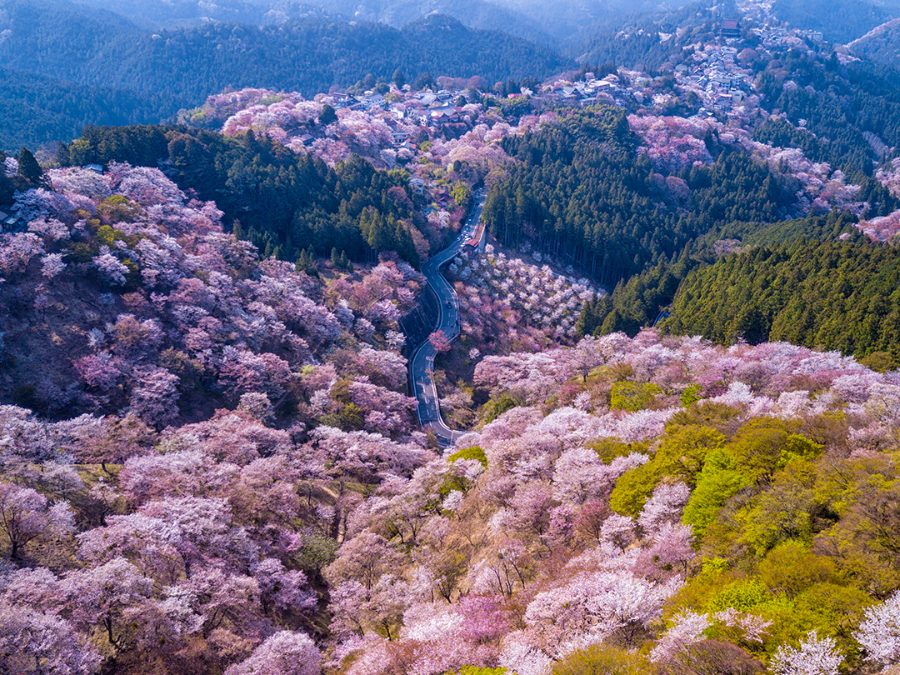
In April, the entire mountainside ripples in pink, and the panorama from the rotenburo baths resembles a floating garden. It’s a rare and unrepeatable hanami experience, where the sight of nature dressed in festive blossoms and the warmth of the rising spring water come together in a fleeting yet perfect moment. Here, you can drift alongside the cherry petals that land on the water’s surface, while the world around you seems to slow down.
The Ancient Secrets of the Onsen Ritual
The onsen experience is not only about breathtaking views or luxurious surroundings⎯it is rooted in centuries-old rituals that form the foundation of Japan’s bathing culture. The use of hot springs is closely tied to Shinto concepts of purity, where water provides not just physical cleansing but spiritual purification as well. Bathing, therefore, becomes a kind of transitional state: a deliberate step away from the noise of the outside world and a return to the rhythms of nature.
One of the most important aspects of traditional etiquette is thorough cleansing before entering the water. Onsen pools are spaces for relaxation, not washing; cleaning the body beforehand is a prerequisite for fully immersing oneself in the spring. This act is not merely a matter of hygiene⎯it is also a symbolic crossing of a threshold: washing away the “dust” of daily life before stepping into the sacred space of nature.
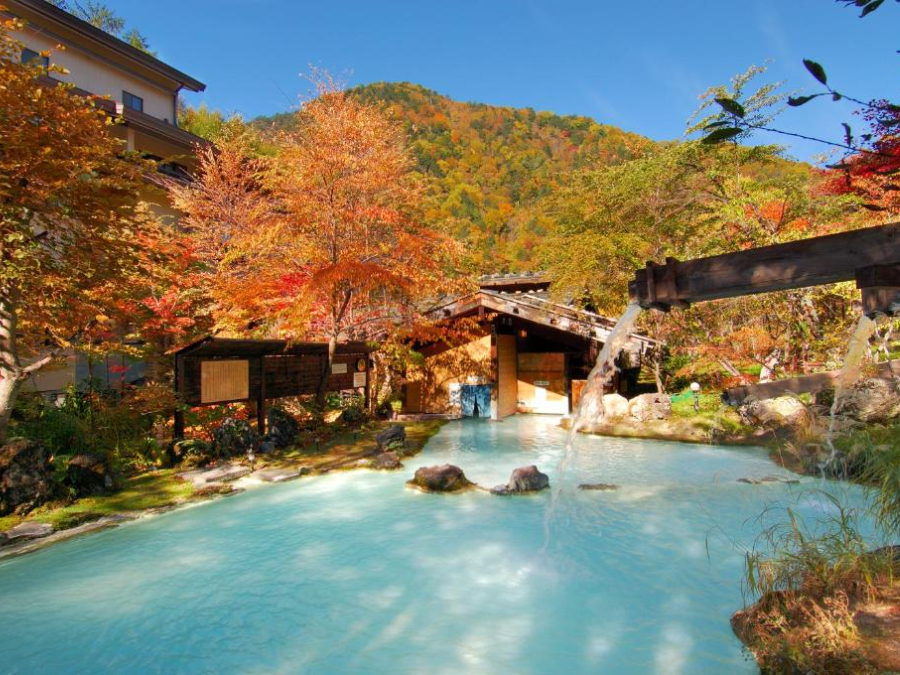
The water often reaches temperatures of 40–42 °C, which can feel intense at first, but after a few minutes the body adapts, and the heat evokes a sense of floating calm. Silence here is not mere courtesy⎯it is part of the experience. Soft conversation or complete quiet allows guests to attune to the subtle details of their surroundings: the whisper of the wind, the dance of leaves in the trees, the gentle ripples on the water, or the slow descent of cherry petals.
The onsen is often linked to the aesthetics of the present moment, where the absence of distractions is not emptiness but an invitation to turn inward. This experience is especially powerful in outdoor rotenburo baths, where the boundary between the body floating in the water and the landscape reflected on its surface almost disappears entirely.
Japan’s luxury onsens are therefore more than just accommodations or wellness centers⎯they are spaces for profound connection with nature. During sakura season, this experience condenses into a fleeting yet perfect aesthetic moment, where one can float alongside cherry petals drifting on the surface of the thermal waters, coming as close as possible to the essence of the flower festival: a deep, bittersweet reverence for beauty, life’s impermanence, and the transient nature of existence.